
Macular Degeneration and Auto Insurance — Alaska
Free to compare
When the Vision Test Becomes Mandatory
You turned 69, received your renewal notice, and now Alaska requires an in-person vision test at the DMV. Your ophthalmologist has documented macular degeneration—dry or wet—and you are concerned the test will trigger an automatic license revocation. It does not work that way. Alaska's mandatory vision screening at 69 exists to identify functional impairments that require restrictions, not to remove experienced drivers from the road categorically.
The DMV evaluates your visual acuity and field of vision against thresholds that determine whether you qualify for an unrestricted license, a restricted license with specific conditions, or whether adaptive equipment or further medical review is required. Most drivers with early-to-moderate macular degeneration pass with a daylight-only or radius restriction. The question is not whether you can renew—it is what conditions the state attaches and how your insurer responds to those conditions.
“The DMV evaluates whether a restricted license fits your functional vision—most drivers with macular degeneration pass with a daylight-only or radius restriction.”

Find Coverage That Fits Driving Past 75
Compare Auto Insurance for Drivers 75+$50,000
Alaska Bodily Injury Minimum Per Person
Alaska's liability floor is $50,000 per person, $100,000 per accident, and $25,000 property damage. Retirement-era assets exposed in an at-fault accident often exceed these minimums, making higher limits a genuine judgment call regardless of any license restriction.
Alaska Statutes, auto_insurance_state_data
What Alaska's Restricted License Actually Allows
A restricted license in Alaska is not a provisional step toward revocation. It is a permanent classification that acknowledges your functional vision meets the state's safety threshold under specific conditions. The most common restrictions for macular degeneration are daylight-only driving, radius limits within a certain number of miles from your residence, or prohibition from highway speeds. The DMV issues these based on your ophthalmologist's report and your performance during the road test if one is required.
The restriction prints directly on your license. Law enforcement can verify it during any traffic stop, and violating the restriction—driving at night when your license specifies daylight only—is a separate offense that can trigger suspension. Your insurance carrier receives notice of the restriction when you renew your policy or when the state updates your driving record. The carrier cannot refuse to insure you based solely on a restriction the state approved, but they can adjust your premium based on the restriction's risk profile.
Alaska does not publish a single vision-acuity threshold that applies uniformly. The DMV evaluates central vision, peripheral vision, and depth perception together. Drivers with macular degeneration often retain sufficient peripheral vision to meet the standard with a daylight restriction, because night driving amplifies the functional impact of central vision loss. If your ophthalmologist's report shows stable dry macular degeneration and you can demonstrate safe vehicle control during daylight, the restricted license is the expected outcome.
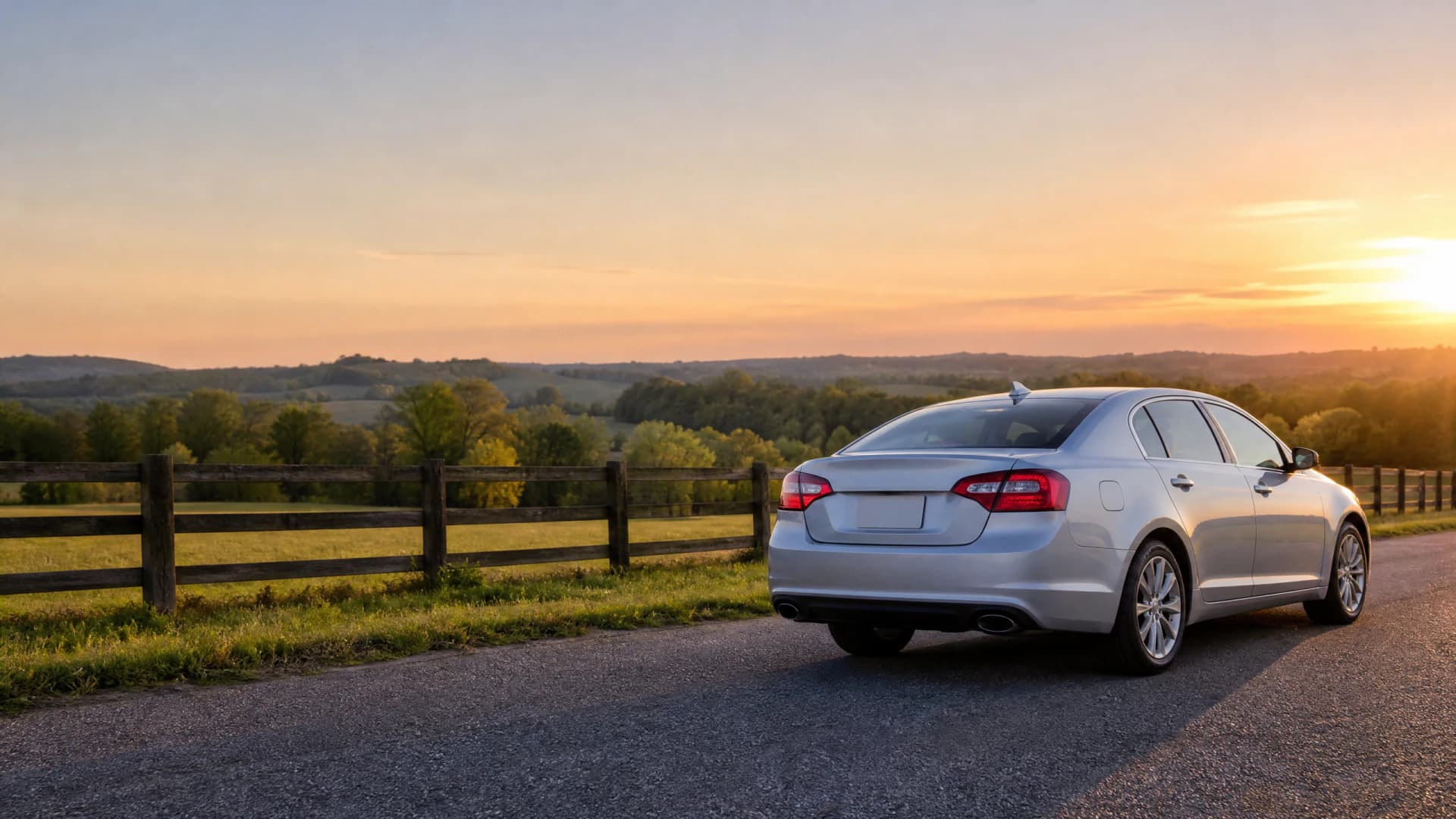
Your carrier cannot non-renew your policy based solely on a state-approved license restriction, but they can re-rate you based on the restriction's risk classification—and most do not disclose how restrictions affect premiums until renewal.
Related Articles

Glaucoma & Alaska License: Vision Rules for Drivers 75+
4/29/2026

Macular Degeneration & Driving in MN: License & Insurance
4/29/2026
Macular Degeneration & Driving in NM: License Rules
4/29/2026
Macular Degeneration & Driving in Colorado: Senior Guide
4/29/2026

Macular Degeneration & Auto Insurance in Alabama
4/29/2026

Macular Degeneration Diagnosis in Illinois
7/13/2026
When to Reconsider Full Coverage
Full coverage—collision and comprehensive together—makes sense when your vehicle's value justifies the combined premium and deductible. Alaska's average annual auto insurance expenditure per insured vehicle was $1,112.96 in 2023, but that figure includes all ages and risk profiles. Drivers over 75 with restricted licenses often pay higher premiums, and collision coverage on a paid-off vehicle becomes a judgment call when the premium exceeds 10 percent of the vehicle's current value annually.
Collision pays for damage to your vehicle after an at-fault accident, minus your deductible. Comprehensive pays for theft, vandalism, weather damage, and animal strikes. If your vehicle is worth $8,000 and your combined collision and comprehensive premium is $900 per year with a $1,000 deductible, you are paying $900 to protect $7,000 of net value after the deductible. That math works for some households and does not for others. The restriction does not change the math—it just raises the premium input.
Liability coverage is non-negotiable regardless of your vehicle's value, because it protects your retirement assets in an at-fault accident. Alaska's $50,000 per person minimum is low relative to medical costs and property damage in a serious collision. Increasing liability limits to $100,000 per person or $250,000 per person costs less than most drivers expect and addresses the actual financial exposure a restricted license does not reduce.
12.5%
Alaska Uninsured Motorist Rate
One in eight drivers on Alaska roads carries no insurance. Uninsured motorist coverage pays your medical bills and vehicle damage when an at-fault driver has no policy, and it costs significantly less than collision coverage while addressing a higher-probability risk.
Insurance Information Institute, 2023
Disclosure Timing and Renewal Mechanics
You are not required to notify your carrier the moment your ophthalmologist diagnoses macular degeneration. The disclosure obligation arises when the state issues a restricted license or when your carrier asks a specific question on a renewal application. If your renewal form asks whether your license status has changed and you now hold a restricted license, answer truthfully. If the form does not ask and your license restriction has not changed since your last renewal, no affirmative disclosure is required mid-term.
Alaska renews licenses every five years, and the vision test requirement at 69 means your next renewal after that age will involve an in-person DMV visit. If the DMV issues a restriction at that renewal, your carrier will see it when they pull your driving record at your next policy renewal. The lag between the DMV issuing the restriction and your carrier receiving it depends on how frequently your carrier pulls records—some pull annually at renewal, others pull only when you file a claim or request a policy change. Do not assume your carrier knows about a restriction the day the DMV issues it.
If you complete Alaska's state-approved defensive driving course, the mature-driver discount applies regardless of whether your license is restricted. Alaska Statute 21.96.025 requires carriers to offer a discount for course completion, but the statute does not fix the percentage—each carrier sets its own amount. The course certificate must come from a state-approved provider, and you submit it to your carrier at renewal. The restriction does not disqualify you from the discount, and the two are independent: the restriction affects your base premium, the course discount reduces it.
What Happens If Your Vision Declines Further
Macular degeneration is progressive, and wet macular degeneration can advance faster than dry. If your functional vision declines to the point where you can no longer meet Alaska's restricted-license threshold, the DMV will not renew your license at all. That outcome is not automatic—it requires a failed vision test or a medical review triggered by your ophthalmologist's report. If you know your vision is declining and you are approaching your renewal date, schedule the DMV vision test early in the renewal window so you have time to address the outcome before your current license expires.
When a license is not renewed due to vision failure, your auto insurance policy does not terminate automatically. The policy remains in force until you cancel it or until the carrier non-renews it at the next renewal cycle. Driving without a valid license voids coverage for any accident you cause, so the policy becomes a liability rather than protection the moment your license expires. If you are no longer driving, cancel the policy in writing and confirm the cancellation date with your carrier. If another household member drives the vehicle, transfer the title and policy to them before your license expires.
Some households keep a vehicle titled in a non-driving senior's name with the policy in the name of an adult child or spouse who holds a valid license. That structure works only if the non-driving senior is explicitly excluded from the policy as a driver. Exclusions must be in writing and signed by the excluded party. If you are excluded and you drive anyway, the carrier will deny any claim and may pursue you for fraud. The exclusion is not a workaround—it is a formal acknowledgment that you will not drive the vehicle under any circumstance.
Compare Carriers Who Understand Restricted Licenses
Not every carrier writing in Alaska prices restricted licenses the same way. Standard carriers often treat a new restriction as a tier-change event that raises your premium significantly, while non-standard carriers accustomed to high-risk profiles may price the restriction more favorably. The General, National General, and Progressive all write policies for drivers with restrictions, and their underwriting models account for daylight-only and radius restrictions as routine rather than exceptional.
Request quotes from at least three carriers after Alaska issues your restricted license. Provide the exact restriction wording from your license when you request the quote—daylight-only, radius-limited, corrective lenses required—because the restriction type affects the rate. If a carrier asks about your medical condition, you are not required to answer beyond what the restriction itself discloses. The restriction is the relevant underwriting fact; the diagnosis is not.
Alaska's mature-driver discount applies at every carrier required to offer it under AS 21.96.025, but the percentage varies. When you compare quotes, ask each carrier what their course-completion discount is and whether it applies on top of any age-based discount they offer. Some carriers auto-apply an age-based discount at 55 or 65 and then layer the course discount on top; others offer only the course discount. The combination determines your net premium, and the only way to know is to ask each carrier directly.
How Carriers Underwrite Restricted Licenses
Standard-tier carriers like State Farm, Allstate, and USAA typically continue coverage when Alaska issues a daylight-only or radius restriction, but they re-rate the policy based on the restriction's actuarial classification. The premium adjustment is not disclosed as a line item—it appears as part of your overall rate at renewal. Non-standard carriers like The General and National General are more accustomed to restricted licenses and often price them more favorably than standard carriers moving a previously unrestricted driver into a higher-risk tier. If your current carrier increases your premium significantly at the renewal following the restriction, comparing quotes from non-standard carriers writing in Alaska is the correct procedural step.
Carriers cannot ask about your medical diagnosis directly, but they receive your driving record from the state, and the restriction prints there. The restriction itself—daylight-only, radius-limited, corrective lenses required—is the underwriting input, not the underlying condition. If you voluntarily disclose macular degeneration to your agent, document that conversation in writing. Some agents interpret a medical disclosure as grounds to recommend policy changes you do not need, and written records clarify what was said and when.
Get Your Free Quote
Compare Auto Insurance for Drivers 75+Frequently Asked Questions
Does macular degeneration automatically disqualify me from renewing my Alaska driver's license?
No. Alaska evaluates your functional vision at renewal, not your diagnosis. Most drivers with early-to-moderate macular degeneration qualify for a restricted license with conditions like daylight-only or radius limits. The DMV issues restrictions based on your vision test and ophthalmologist's report, not the condition's name.
Can my insurance carrier drop me if Alaska puts a restriction on my license?
No. Carriers cannot non-renew your policy based solely on a state-approved license restriction. They can adjust your premium based on the restriction's risk classification, but they must continue coverage as long as you hold a valid Alaska license and meet their other underwriting criteria.
Do I have to tell my insurance company my ophthalmologist diagnosed macular degeneration?
You must disclose a license restriction when your carrier asks on a renewal application. You are not required to disclose the underlying medical diagnosis unless the application asks a specific question about it. The restriction itself is the relevant underwriting fact.
Will I still qualify for Alaska's mature-driver discount if my license is restricted?
Yes. Alaska Statute 21.96.025 requires carriers to offer a discount for completing a state-approved defensive driving course, and a license restriction does not disqualify you. The discount percentage is set by each carrier, and you submit your course certificate at renewal.
Should I keep full coverage on my vehicle if Alaska restricts my license to daylight-only driving?
Full coverage makes sense when your vehicle's value justifies the combined collision and comprehensive premium and deductible. A daylight restriction may raise your premium, making the cost-to-value ratio less favorable. Liability coverage remains essential regardless of your vehicle's value, because it protects your retirement assets in an at-fault accident.
What happens to my insurance if my vision declines and Alaska does not renew my license at all?
Your policy does not terminate automatically when your license expires, but driving without a valid license voids coverage for any accident. Cancel the policy in writing once your license expires, or transfer the vehicle title and policy to a household member with a valid license before that date.