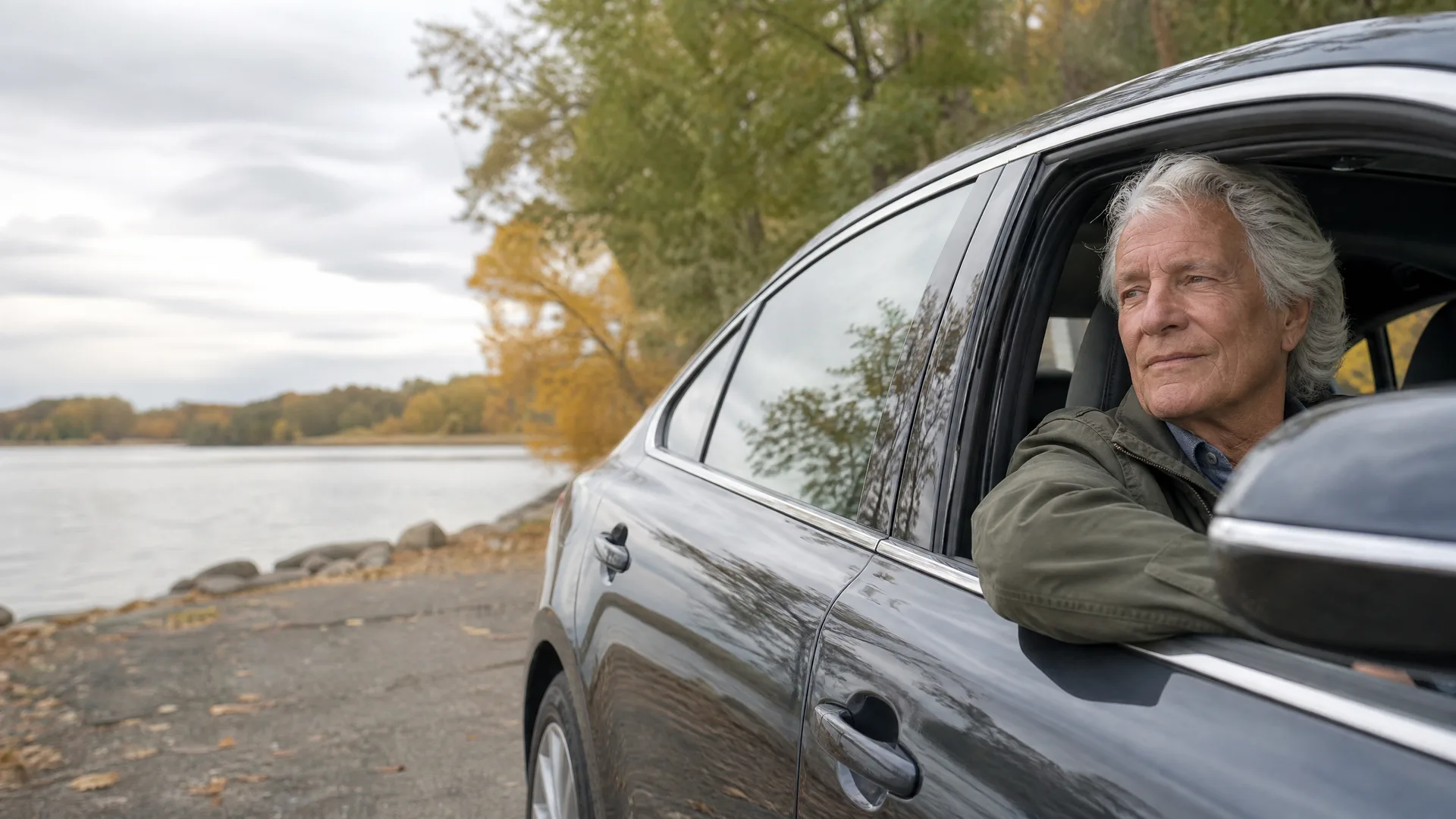
Cataract Surgery and Driving in Delaware: Vision Rules for Seniors
Free to compare
Delaware's Vision Standards for Drivers Over 75
Delaware requires 20/40 corrected vision in at least one eye for an unrestricted Class D driver license. If your vision falls between 20/50 and 20/70 with correction, you receive a daylight-only restriction. Vision worse than 20/70 in both eyes disqualifies you from driving.
Drivers over 75 renew in person every four years and must pass a vision screening at the DMV during each renewal cycle. Between renewals, Delaware does not require routine vision retests unless a medical professional reports a specific vision impairment to DMV Medical Review.
Cataract surgery typically improves vision to 20/40 or better within one week post-op. Most patients who drove with corrective lenses before surgery continue to meet Delaware's standard afterward, often with less dependence on glasses. The question is not whether you can drive again—it is when, and whether your policy and license restrictions should change.

Post-Operative Driving Clearance Timeline
Your surgeon determines when you can legally resume driving in Delaware. Most ophthalmologists clear patients for daytime driving 3–5 days after uncomplicated cataract surgery, once the eye stabilizes and distance vision meets functional thresholds.
You cannot drive on surgery day or the following day. Post-op swelling, light sensitivity, and depth perception changes make driving unsafe during the first 48 hours even if your corrected vision tested well pre-surgery. If you had both eyes done, the clearance timeline resets after the second procedure.
Your discharge paperwork will include a driving restriction notice. Delaware law treats this as a temporary medical restriction. Driving before your surgeon clears you violates that restriction and exposes you to liability if an accident occurs, even if the accident was not vision-related. Most carriers will deny a claim if you were driving against medical orders at the time of loss.


When Delaware DMV Requires Notification
Delaware DMV does not require you to report cataract surgery or vision improvement unless your license carried a vision-based restriction that your surgeon now says you no longer need. If your license shows "corrective lenses required" or "daylight driving only" and your post-op vision removes that need, you must visit a DMV location to update your license.
You bring your surgeon's clearance letter stating your corrected vision now meets unrestricted standards, pass a new vision screening at the counter, and receive an updated license without the restriction. This process takes one visit and costs nothing beyond the standard duplicate license fee if your current license has not expired.
If your license had no vision restriction before surgery, DMV does not need to know. Your next scheduled renewal will capture any vision changes through the standard screening. Voluntary reporting offers no benefit and creates unnecessary paperwork.
How Vision Improvement Affects Your Insurance Rate
Most carriers in Delaware reduce premiums for drivers over 75 who remove a corrective lens restriction from their license, but they will not apply the reduction unless you notify them. The average reduction ranges from $8 to $22 per month, depending on your carrier and coverage level.
Carriers view restriction removal as reduced risk. A driver who previously required corrective lenses and now meets vision standards without them represents improved medical stability. If you report the change within 30 days of receiving your updated license, most carriers backdate the discount to your surgery date.
If your vision improved but your license still shows a corrective lens restriction because you have not updated it at DMV, your carrier will not adjust your rate. The restriction on your license is the rating factor, not your actual post-op acuity. This is why updating your DMV record matters even when Delaware does not legally require it.

Find Coverage That Fits Driving Past 75
Compare Auto Insurance for Drivers 75+
Policy Adjustments After Surgery
Call your carrier within two weeks of your surgeon clearing you to drive. Report the surgery date, clearance date, and whether you updated your license to remove restrictions. Ask whether your policy requires a new vision affidavit or medical clearance form for drivers over 75.
Some carriers require a signed statement from your surgeon confirming your corrected vision meets Delaware's 20/40 standard before they adjust your rate. This is not a DMV requirement—it is a carrier underwriting rule, more common for drivers over 80. If your carrier requests it, your surgeon's office typically provides the letter at no charge as part of post-op documentation.
Do not assume your carrier will find out about your license update automatically. Delaware DMV does not share license restriction changes with insurers unless a suspension or revocation occurs. You must initiate the conversation, and you must do it before your next renewal to capture the full year of savings.

Non-Renewal Risk for Drivers Over 75 Post-Surgery
Cataract surgery does not increase your non-renewal risk in Delaware. It reduces it. Carriers non-renew older drivers based on uncorrected vision loss, multiple at-fault accidents, or medical restrictions that suggest progressive impairment. Successful cataract surgery with documented vision improvement signals the opposite.
If you had a daylight-only restriction before surgery and your post-op vision removes it, your risk profile improves in the carrier's actuarial model. Drivers over 75 who maintain unrestricted licenses and clean driving records remain in standard underwriting pools with most major carriers in Delaware.
The non-renewal risk appears when you delay surgery despite worsening vision, accumulate restrictions, or your license shows multiple medical exemptions. If your surgeon recommended cataract surgery and you complete it, you have taken the action carriers view as risk mitigation. Document it, report it, and update your license if applicable.
Should You Keep Full Coverage After Vision Improves?
Full coverage remains cost-justified if your vehicle's value exceeds $4,000 and you could not replace it out of pocket after a total loss. Vision improvement does not change that calculation. What changes is your collision premium—some carriers reduce it when your license restrictions decrease.
If you drive a paid-off vehicle worth less than $3,000, dropping collision and comprehensive after your vision stabilizes makes financial sense for most drivers over 75. Your liability limits matter more than physical damage coverage at that equity level, and your improved vision supports your ability to avoid at-fault accidents that trigger liability claims.
Run the numbers with your current carrier before you drop coverage. Some drivers over 75 in Delaware pay $40–$60 per month for collision and comprehensive combined. If your vehicle is worth $5,000, you are paying 10–14% of its value annually to insure it against physical damage. That ratio rarely justifies the spend unless you drive more than 8,000 miles per year or park in a high-theft zip code.
Frequently Asked Questions
Do I need to retake a driving test in Delaware after cataract surgery?
No. Delaware does not require a road test after cataract surgery. You pass a vision screening at DMV if you are updating your license to remove a restriction, but that is a stationary eye chart test at the counter, not a behind-the-wheel exam.
Will my insurance rate go up after cataract surgery?
No. Cataract surgery with successful vision improvement typically reduces your rate if you report it and update any license restrictions. Carriers view documented vision correction as reduced risk, not increased.
How long do I wait to drive at night after cataract surgery?
Most surgeons in Delaware clear patients for night driving 7–10 days post-op, once glare and halos from healing subside. Your clearance letter will specify daytime-only or unrestricted, and you must follow that timeline exactly.
Can my carrier cancel my policy if I delay cataract surgery?
Not for delaying surgery itself, but if your vision worsens to the point that DMV restricts or suspends your license and you do not disclose it, your carrier can non-renew or cancel for material misrepresentation. Timely surgery avoids that scenario.
Related Articles

Cataract Surgery & Driving in DC: Senior Vision Rules
4/29/2026

Cataract Surgery & Driving: PA Vision Rules for Seniors 75+
4/29/2026

Cataract Surgery & Driving: NJ Vision Rules for Seniors
4/29/2026

Cataract Surgery & Driving in SD: Vision Rules After 75
4/29/2026

Driving After Cataract Surgery in CA: Vision & Insurance
4/29/2026

Cataract Surgery & Driving in FL: Vision Rules for 75+
4/29/2026