
Cataract Surgery and Driving in Utah: Post-Op Vision, Restrictions
Free to compare
What Utah Law Requires Before You Drive After Cataract Surgery
Utah law does not impose a mandatory waiting period after cataract surgery before you can legally drive. The Division of Motor Vehicles defers to your ophthalmologist's clinical judgment on when your vision meets the state's minimum standard: 20/40 corrected vision in at least one eye.
Your surgeon will schedule a follow-up exam within 24 to 48 hours after the procedure. At that appointment, they measure your corrected vision and assess whether inflammation, light sensitivity, or depth perception issues remain. Most patients regain 20/40 vision or better within 24 hours, but individual recovery varies based on pre-existing conditions like macular degeneration or diabetic retinopathy.
Utah does not require you to file medical documentation with the DMV after cataract surgery unless your license was previously restricted due to vision impairment. If you hold a vision-restricted license, your ophthalmologist must submit a Vision Examination Report (Form DLD 52) confirming you now meet unrestricted standards. Without that filing, your restriction remains in effect and you can be cited for violating license conditions even if your vision has improved.

How Auto Insurance Carriers Treat Post-Surgery Driving
Your auto insurance policy contains a medical fitness clause that most drivers over 75 have never read. It states that you must be medically able to operate a vehicle safely at the time of any incident. If you cause an accident within the first week after cataract surgery, your carrier will request your surgical and follow-up records during the claim investigation.
Carriers apply a 24-hour minimum standard regardless of what your surgeon verbally tells you at discharge. If you drive 12 hours post-op and cause a collision — even a minor one — the carrier can argue you violated the medical fitness clause and reduce or deny the claim. This is not theoretical: State Farm, Progressive, and Farmers have all cited post-surgical driving as a contributing factor in claim disputes involving drivers over 70 in Utah and neighboring states.
The safer standard is waiting until your first follow-up exam confirms 20/40 vision or better and your surgeon provides written clearance. That documentation creates a defendable record if a claim arises weeks or months later. Verbal clearance is not sufficient if the claim reaches dispute or litigation.


Vision Standards That Trigger License Restrictions in Utah
Utah imposes tiered restrictions based on corrected vision measured at your DMV renewal exam. If your vision falls between 20/50 and 20/70 in your better eye, the DMV restricts you to daylight driving only. Vision worse than 20/70 but better than 20/100 results in a geographic restriction limiting you to a specific radius from your home, typically 25 miles.
Drivers over 75 renew in person every five years and must pass a vision screening at each renewal. If cataract development caused your vision to decline below 20/40 before surgery, the DMV may have already imposed restrictions at your last renewal. Those restrictions do not automatically lift after surgery.
You must return to the DMV with a completed Vision Examination Report showing you now meet 20/40 standards. The DMV will reissue your license without restrictions within 10 business days. Until that reissue occurs, driving outside your restricted conditions — for example, at night when you hold a daylight-only restriction — is a Class C misdemeanor and grounds for your carrier to deny coverage if an incident occurs during prohibited hours.
How Cataract Surgery Affects Your Insurance Rates in Utah
Cataract surgery itself does not appear on your driving record and is not a rating factor carriers use to set your premium. Utah law prohibits carriers from requesting access to your medical records unless you file a claim that raises medical causation as an issue.
What does affect your rates: any vision-related license restriction that appears on your MVR. Carriers in Utah apply a 10% to 25% surcharge if your license shows a daylight-only or geographic restriction, even if your driving record is otherwise clean. That surcharge remains in effect until your MVR reflects an unrestricted license.
If you had cataract surgery specifically to lift a vision restriction and restore full driving privileges, notify your carrier once the DMV reissues your unrestricted license. Provide a copy of your new license and request removal of the restriction surcharge. Most carriers process the adjustment within one billing cycle, but you must initiate the request — they do not monitor MVRs for restriction removals between renewal periods.

Find Coverage That Fits Driving Past 75
Compare Auto Insurance for Drivers 75+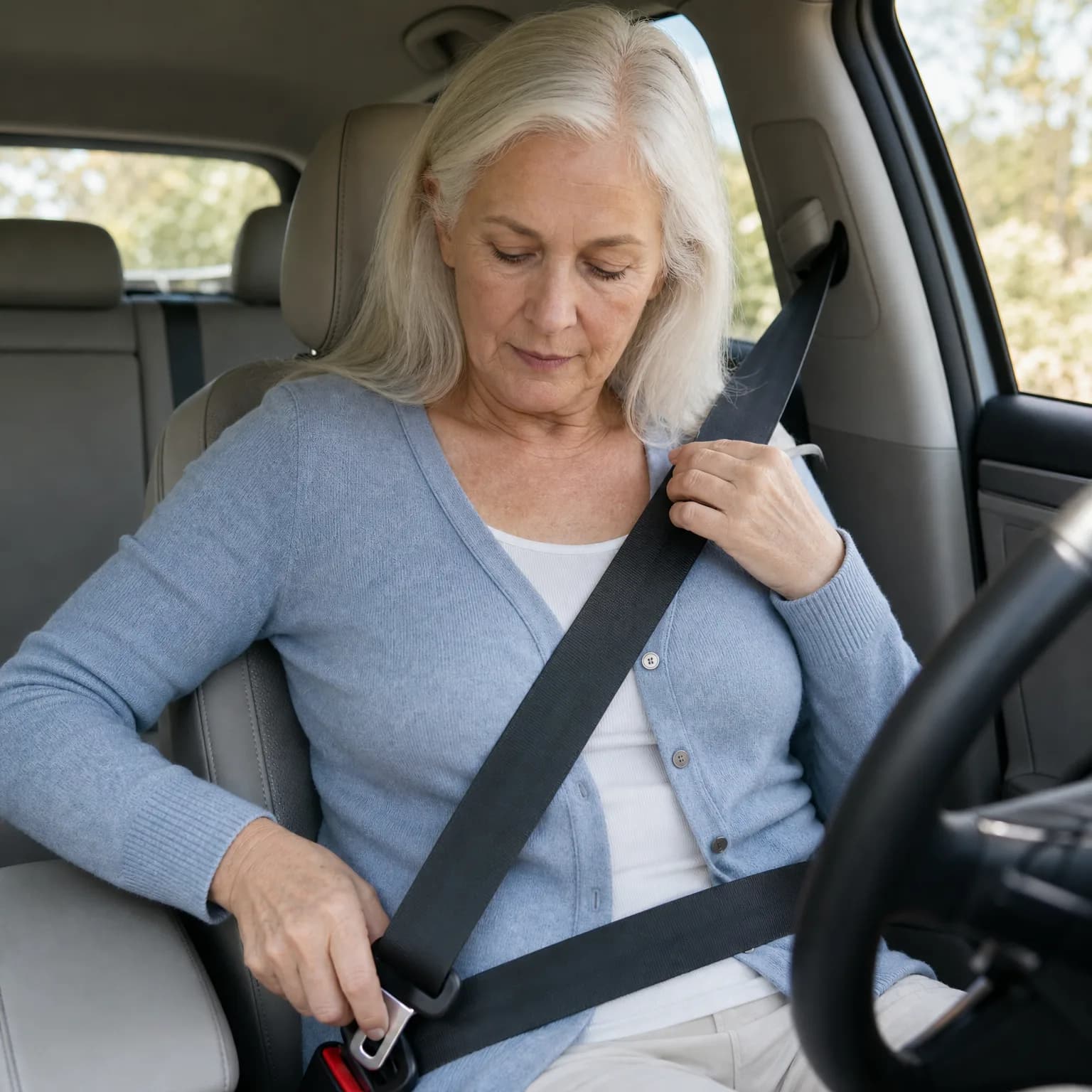
What Happens If You Cause an Accident Before Full Recovery
If you cause a collision within the first two weeks after cataract surgery, the other driver's attorney will request your medical records during discovery. They will compare the surgery date to the accident date and argue that post-operative impairment — light sensitivity, depth perception lag, or residual inflammation — contributed to the crash.
Utah follows a modified comparative fault system. If the court assigns you 50% or more of the fault, you cannot recover damages from the other driver. If post-surgical impairment is found to be a contributing factor, that finding increases the percentage of fault assigned to you and reduces what your liability coverage will pay on the other driver's claim.
Your own collision and medical payments coverage remain in effect, but your carrier will subrogate against you if they determine you violated the policy's medical fitness clause. That means they pay the claim initially, then pursue reimbursement from you personally. This is most common when the accident occurs within 24 hours of surgery and you have no written clearance from your ophthalmologist.

Reporting Requirements If Your Surgery Was Due to a Sudden Vision Change
Utah requires drivers to self-report any medical condition that impairs their ability to operate a vehicle safely. If a sudden cataract progression caused a rapid vision decline — for example, from 20/30 to 20/80 over three months — you are legally required to stop driving and notify the DMV before scheduling surgery.
Most drivers over 75 do not know this requirement exists. The DMV does not actively enforce it unless a crash occurs and the investigation reveals you were driving with vision below 20/40 for weeks or months before surgery. At that point, the DMV can suspend your license retroactively and cite you for failure to report a disqualifying condition.
Your insurance carrier can also deny claims if they discover you were driving with vision below state minimums before surgery. The medical fitness clause applies both before and after the procedure. If your ophthalmologist documented vision worse than 20/40 at any pre-operative exam, that record can be used to argue you were unfit to drive at the time of a collision, even if the collision was unrelated to your vision.
How to Document Your Post-Operative Fitness for Insurance Purposes
Request a written clearance letter from your ophthalmologist at your first follow-up exam. The letter should state the exam date, your corrected vision in each eye, and an explicit statement that you are medically cleared to resume driving without restrictions. Keep this letter in your vehicle for at least 90 days after surgery.
If you hold a vision-restricted license before surgery, request that your ophthalmologist complete a Vision Examination Report (Form DLD 52) at the same follow-up visit. Submit that form to the DMV within 10 days. Once the DMV issues your unrestricted license, provide a copy to your insurance agent and request removal of any restriction surcharge from your policy.
If you are involved in any collision or moving violation within six months of surgery, inform your carrier of the surgery date and provide your clearance letter and follow-up exam records immediately. This creates a proactive record that you met medical fitness standards and reduces the likelihood the carrier will investigate post-surgical impairment as a contributing factor.
Frequently Asked Questions
Can my insurance company find out I had cataract surgery if I don't tell them?
Your carrier cannot access your medical records unless you file a claim that involves medical causation. If you cause an accident within weeks of surgery, the other driver's attorney will request your surgical records during litigation, and your carrier will receive copies through that process. Carriers also receive notification if the DMV changes your license from restricted to unrestricted, which may prompt questions about what medical event triggered the change.
Does Utah require a driving test after cataract surgery for drivers over 75?
Utah does not require a driving test after cataract surgery at any age. You must pass a vision screening at your next in-person renewal, which occurs every five years for drivers over 75. If you previously held a vision restriction and your surgery restored your vision to 20/40 or better, you can request an earlier vision retest at any DMV office to lift the restriction before your scheduled renewal.
Will my rates go down after cataract surgery removes my vision restriction?
Yes, if you were paying a surcharge due to a daylight-only or geographic license restriction. Once the DMV reissues your unrestricted license, request removal of the restriction surcharge from your carrier. Most Utah carriers apply a 10% to 25% surcharge for vision restrictions, and that surcharge drops off within one billing cycle after you provide proof of an unrestricted license.
What if my doctor clears me to drive but I still feel uncomfortable with night driving after surgery?
Self-limiting your driving to daylight hours is a reasonable personal decision during recovery. Your medical clearance satisfies the insurance policy's fitness requirement, but you are not required to drive at night even if legally permitted. If you choose to request a voluntary daylight restriction from the DMV, be aware that carriers will apply a restriction surcharge even though the restriction is voluntary, not medically mandated.
Related Articles

Cataract Surgery & Driving After 75 in Vermont
4/29/2026

Driving After Cataract Surgery in Illinois (Age 75+)
4/29/2026

Driving After Cataract Surgery in CO: Vision & Coverage
4/29/2026

Cataract Surgery & Driving in Texas: Post-Op Standards
4/29/2026

Cataract Surgery & Driving in FL: Vision Rules for 75+
4/29/2026

Cataract Surgery & Driving in TN: Vision Rules Age 75+
4/29/2026