
Macular Degeneration & Your Kentucky License: What You Must Report
Free to compare
What Kentucky's Vision Standard Actually Measures After a Macular Degeneration Diagnosis
Kentucky requires 20/60 corrected vision in at least one eye and a horizontal visual field of at least 120 degrees for an unrestricted license. Most drivers with early to moderate macular degeneration can meet the peripheral field requirement even when central acuity drops, because AMD primarily affects the macula, not peripheral vision. The Division of Driver Licensing reviews cases individually when a physician files a medical report.
The central acuity standard is more forgiving than most drivers expect. If you can read 20/60 with corrective lenses in your better eye, you meet the minimum for an unrestricted license regardless of what your worse eye measures. Kentucky does not require both eyes to meet the standard. Many ophthalmologists treating AMD patients don't clearly explain this threshold, leaving drivers to assume any vision decline automatically triggers suspension.
Peripheral field measurement happens during a formal visual field test administered by your eye doctor, not at the DMV counter. Kentucky accepts reports from licensed ophthalmologists and optometrists. If your AMD has progressed to include significant scotomas (blind spots) that reduce your horizontal field below 120 degrees, you'll face restrictions. Carriers treat medically restricted licenses differently than age-based restrictions when calculating premiums.

When Your Doctor's Report Triggers a DMV Medical Review
Kentucky physicians are not legally required to report vision conditions to the DMV, but many ophthalmologists do so after diagnosing progressive AMD or when visual acuity drops below certain thresholds during treatment monitoring. Once the Division of Driver Licensing receives a medical report, they mail a Medical Review Notice requiring you to submit updated vision documentation within 30 days. Missing this deadline results in automatic license suspension without further notice.
The review process requires a completed Vision Report form signed by your treating ophthalmologist or optometrist within the past 90 days. This form documents corrected acuity in each eye, horizontal and vertical field measurements, and whether your doctor recommends restrictions. The DMV does not conduct vision testing themselves for medical reviews—they rely entirely on your physician's assessment and recommendation.
If your vision meets unrestricted standards but your doctor notes concerns about glare sensitivity, night vision, or reaction time related to AMD progression, the DMV may impose restrictions your doctor didn't explicitly request. Daylight-only restrictions are common for drivers over 75 with documented AMD, even when vision measurements technically meet unrestricted thresholds. Your insurance carrier will ask about restrictions at renewal, and answering incorrectly can void coverage during a claim.

Restricted License Options Kentucky Offers for Progressive AMD
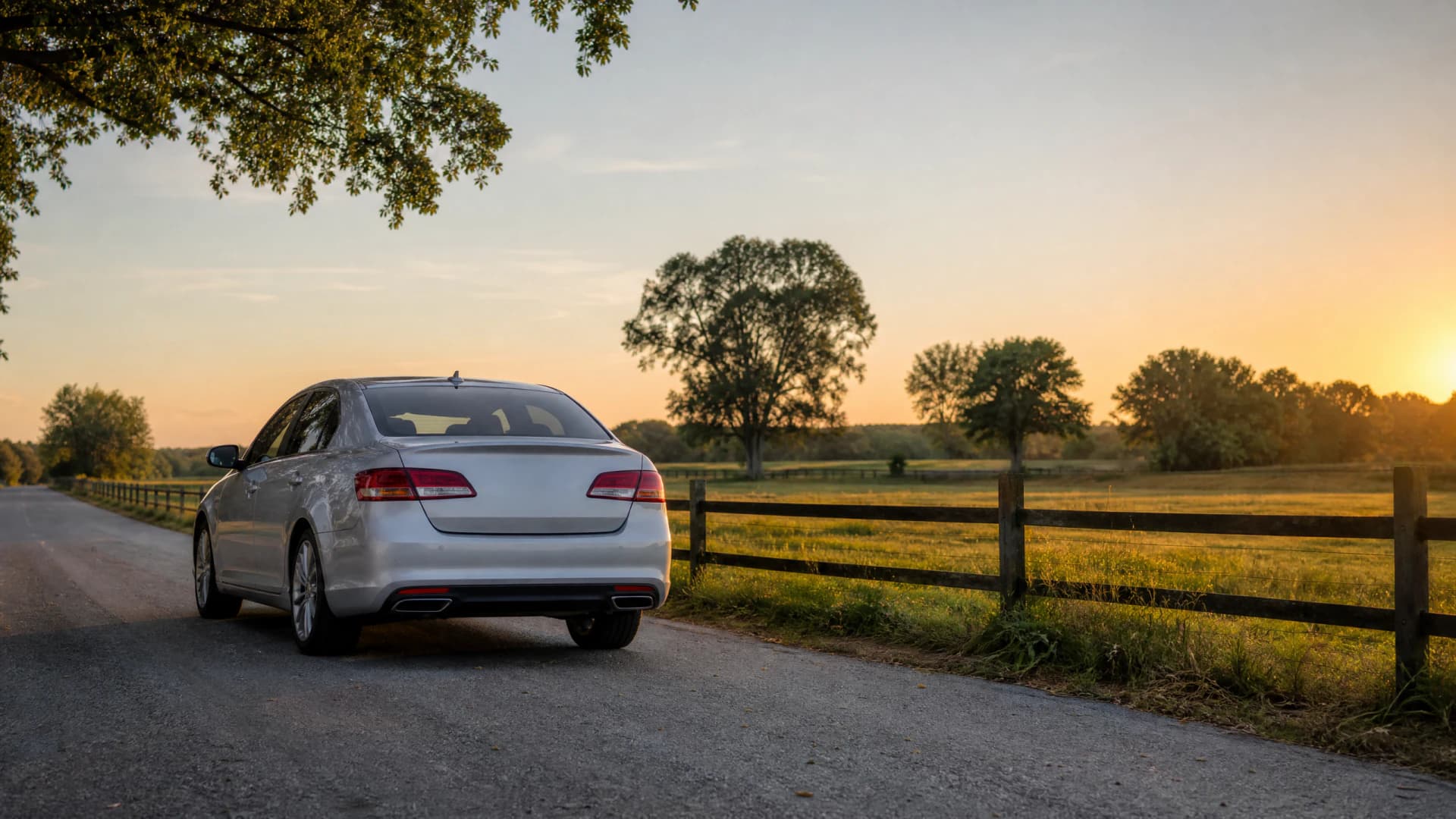
Kentucky issues four restriction categories relevant to drivers with macular degeneration: daylight driving only, limited radius from home address, corrective lenses required, and outside mirrors required. Daylight-only restrictions are most common for AMD patients over 75, typically defined as one hour after sunrise to one hour before sunset. The DMV does not provide exact time windows—law enforcement interprets the restriction based on natural light conditions at the traffic stop location.
Radius restrictions limit driving to a specified distance from your home address, commonly 10, 25, or 50 miles depending on your physician's recommendation and your stated driving needs during the review process. You must document why you need a specific radius—medical appointments, grocery access, family caregiving—and provide addresses. The DMV maps these locations and sets the restriction accordingly. Violating radius restrictions during a traffic stop can result in immediate suspension regardless of whether you were driving safely.
Combination restrictions are standard for drivers over 75 with documented AMD. A typical restricted license for this population reads: "Corrective lenses required / Daylight only / Outside mirrors required." Each restriction affects your insurance differently. Corrective lenses and mirror requirements rarely change premiums. Daylight and radius restrictions trigger underwriting review at most carriers, and some non-renew policies rather than price the increased administrative complexity of verifying compliance.
How to Discuss Insurance Disclosure Timing With Your Agent
You must disclose a restricted license to your insurance carrier at the time the restriction is imposed, not at your next policy renewal. Kentucky law requires policyholders to notify carriers of material changes to driving privileges within 30 days. Failing to disclose a restriction can void your policy retroactively if discovered during a claim investigation, leaving you personally liable for damages even if you were not at fault.
Call your agent the same day you receive your restricted license in the mail. Do not wait for the carrier to ask at renewal. Most carriers for drivers over 75 will re-run your motor vehicle report quarterly or semi-annually, and restrictions appear on your driving record immediately when the DMV processes your medical review. If the carrier discovers an undisclosed restriction during a routine MVR pull, they can non-renew your policy at the next term or cancel mid-term in some cases.
Some carriers reduce premiums for daylight-only restrictions because you're excluded from higher-risk nighttime driving. Others increase premiums or decline to renew because restrictions signal increased medical review scrutiny and potential for progression to full suspension. Ask your agent specifically how your current carrier prices restricted licenses before disclosure. If your carrier non-renews, you have options through Kentucky's assigned risk pool and non-standard carriers that specialize in medical restriction cases, but securing replacement coverage is easier before non-renewal than after.

Find Coverage That Fits Driving Past 75
Compare Auto Insurance for Drivers 75+
What Happens to Your Premium When Restrictions Appear on Your Record
Carrier pricing for restricted licenses varies more than any other rating factor for drivers over 75. State Farm, GEICO, and Progressive typically continue coverage with daylight-only restrictions at the same premium or a 5-10% reduction for reduced exposure. Allstate and Nationwide more frequently non-renew at the next term rather than re-price. Smaller regional carriers and non-standard markets like Dairyland, Bristol West, and National General actively write restricted license policies but at premiums 15-30% higher than unrestricted rates.
Radius restrictions complicate pricing more than daylight restrictions. Carriers cannot easily verify compliance, and claims outside your permitted radius create coverage disputes even when the accident facts are clear. Some carriers exclude coverage entirely for trips outside your restriction zone. Others cover the claim but cancel your policy immediately after settlement. Read your declarations page after adding a radius restriction—if you see an endorsement titled "Limited Driving Radius" or similar, it likely includes an out-of-area exclusion.
If your AMD progresses and your restrictions tighten—moving from daylight-only to daylight plus 25-mile radius, for example—treat it as a new disclosure event. Call your agent the day you receive the updated license. Carriers price incremental restriction changes individually. The premium impact of adding a radius restriction to an existing daylight restriction often exceeds the impact of the original daylight restriction alone.

How Kentucky's Mature Driver Course Applies With Medical Restrictions
Kentucky offers a mandatory insurance discount for drivers who complete an approved mature driver improvement course, and the discount remains available even after your license becomes restricted for medical reasons. Carriers must apply the discount if you're 55 or older and complete a state-approved course, regardless of whether your license carries AMD-related restrictions. The discount typically ranges from 5-10% and applies for three years from your course completion date.
AAA, AARP, and the Kentucky Office of Highway Safety maintain lists of approved in-person and online course providers. Completion certificates must be submitted to your carrier within 30 days to qualify for the discount. If you complete the course before your medical review results in restrictions, the discount applies to your restricted premium. If you complete it after restrictions are imposed, the discount applies immediately upon certificate submission but does not remove or reduce your restrictions.
Some carriers will non-renew your policy despite the mature driver discount if your restrictions signal high progression risk. The discount is a mandated rate reduction, not a guarantee of continued coverage. If you're facing a medical review and considering the mature driver course, complete it before your restricted license is issued. The certificate gives your agent additional underwriting support when arguing for policy continuation during the carrier's internal review process.
Whether Full Coverage Still Makes Sense on a Vehicle You Drive With Restrictions
Comprehensive and collision coverage remain financially justified on most vehicles driven by restricted license holders if the vehicle is worth more than $5,000 and you cannot replace it out of pocket. Restrictions reduce your exposure to certain accident types—daylight-only drivers avoid nighttime deer strikes and low-visibility crashes—but comprehensive coverage protects against non-driving risks like hail, theft, and fire that don't decrease with restricted use.
Collision coverage justification depends on your radius restriction and typical driving environment. A 10-mile radius in rural Kentucky involves different risk exposure than a 50-mile radius including Lexington or Louisville metro areas. If your restricted driving is limited to low-speed residential errands within a small radius, and your vehicle is worth under $4,000, dropping collision and retaining comprehensive often makes sense. Calculate the breakeven: if your collision premium exceeds 10% of your vehicle's value annually, you're self-insuring at a lower cost.
Medical payments coverage becomes more important, not less, for restricted license holders over 75. Your health insurance may cover accident injuries, but Medicare does not cover all accident-related costs immediately, and coordination of benefits can delay payment for months. Medical payments coverage of $5,000-$10,000 pays your out-of-pocket costs regardless of fault and without waiting for liability determination. This coverage typically costs $30-$60 annually for drivers over 75 and pays out faster than any other coverage type after an accident.
Frequently Asked Questions
Does Kentucky automatically suspend your license when you're diagnosed with macular degeneration?
No. Kentucky reviews your case individually based on vision measurements, not diagnosis alone. If you meet the 20/60 corrected acuity standard in at least one eye and maintain 120 degrees of horizontal visual field, you can keep an unrestricted license even with an AMD diagnosis.
Will my car insurance premium increase if my license is restricted to daylight driving only?
It depends on your carrier. State Farm, GEICO, and Progressive typically maintain or reduce premiums by 5-10% for daylight-only restrictions. Allstate and Nationwide more often non-renew at the next term. Non-standard carriers usually add 15-30% to premiums when insuring restricted licenses.
Can I drive outside my radius restriction in Kentucky if it's an emergency?
No recognized emergency exception exists in Kentucky statute. Violating your radius restriction during a traffic stop can result in immediate suspension regardless of your reason for the trip. If you need to travel outside your radius regularly, request a review and provide documentation supporting a larger radius.
What happens if I don't tell my insurance company about a new restricted license?
Your policy can be voided retroactively if the restriction is discovered during a claim. Kentucky law requires you to notify your carrier within 30 days of any material change to your driving privileges. Carriers run motor vehicle reports quarterly for most drivers over 75, so undisclosed restrictions are usually discovered within 90 days.
Does the Kentucky mature driver discount still apply if my license has medical restrictions?
Yes. Kentucky mandates the discount for all drivers 55 and older who complete an approved course, regardless of license restrictions. The discount typically ranges from 5-10% and applies for three years, but it does not prevent a carrier from non-renewing your policy if your restrictions signal high risk.
Related Articles

Macular Degeneration & Your Kansas License: Reporting Rules
4/29/2026
Macular Degeneration & Driving in MA: License Rules
4/29/2026

Glaucoma & Kentucky License Rules for Drivers Over 75
4/29/2026

Macular Degeneration & Driving in RI: License Rules
4/29/2026

Macular Degeneration & Driving in WV: License Options
4/29/2026
Macular Degeneration & Driving in Arizona: Licenses
4/29/2026