
Macular Degeneration and Your Montana License: What You Must Report
Free to compare
Does Montana require vision testing at license renewal after age-related macular degeneration diagnosis?
Montana does not require vision testing at standard license renewal for drivers of any age. You renew every eight years with no mandatory vision screening at the Motor Vehicle Division office.
The trigger for vision review comes from physician reporting, not renewal schedule. Under Montana Code Annotated 61-5-205, physicians must report patients with conditions that significantly impair safe driving, including severe vision loss from macular degeneration. The report goes directly to the Montana Motor Vehicle Division Medical Review Program.
Most drivers over 75 discover this when they receive a notice requiring medical documentation or a driving evaluation. The notice arrives weeks after a routine eye exam where their ophthalmologist documented vision below Montana's minimum standard: 20/40 corrected vision in at least one eye, or a horizontal visual field of at least 140 degrees.

What vision threshold triggers physician reporting in Montana?
Physicians must report when corrected vision drops below 20/70 in both eyes, or when visual field restriction creates substantial impairment. Wet macular degeneration progressing to 20/100 vision or severe central scotoma typically triggers mandatory reporting.
The reporting standard differs from the minimum required to hold an unrestricted license. Montana allows unrestricted licenses with 20/40 corrected vision in one eye. Physicians report when vision deteriorates beyond functional driving ability, not just below the license minimum.
If you're between 20/40 and 20/70 with stable dry macular degeneration, your physician likely won't file a report. If anti-VEGF treatment is maintaining vision near 20/50, you may avoid reporting for years. The critical threshold is whether your ophthalmologist documents that vision impairment poses a safety risk, not just that you have a diagnosis.

How does Montana's restricted license system work for drivers with vision loss?
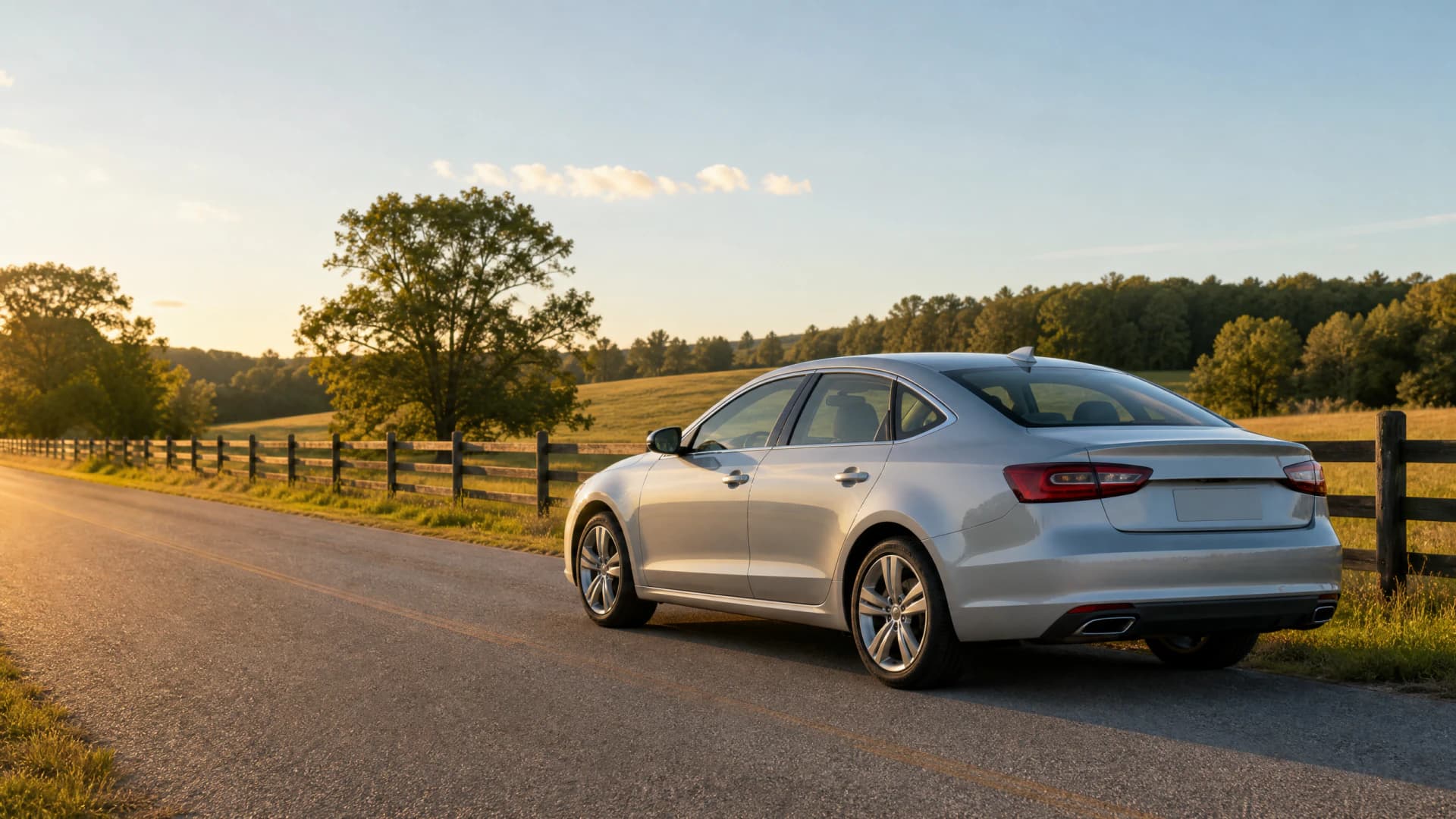
Montana issues restricted licenses when you don't meet unrestricted standards but can drive safely under specific conditions. Common vision-related restrictions include daylight-only driving, geographic radius limits, or requirements for outside mirrors.
After physician reporting or a failed reexamination, the Motor Vehicle Division refers you to the Medical Advisory Board. The board reviews medical documentation from your ophthalmologist and may require a behind-the-wheel evaluation through a certified driving rehabilitation specialist. This evaluation costs $300–$500 and is not covered by Medicare.
If the evaluation shows you can drive safely within defined limits, Montana issues a Class D license with printed restrictions. Restriction code 6 (daylight only) is most common for macular degeneration patients. Restriction code 8 limits you to a specific geographic area, typically a radius from your home address. Violating printed restrictions carries the same penalty as driving without a valid license.
When are you required to notify your insurance carrier about macular degeneration?
Montana law does not require you to notify your auto insurer about a medical diagnosis. You have no legal obligation to report macular degeneration, even after physician reporting to the state.
Your obligation to the carrier is different: you must report license status changes. When Montana adds a restriction code to your license or suspends your license pending medical review, that change must be reported to your insurer within 30 days under standard policy terms. Failure to report a restricted or suspended license can void coverage if an accident occurs while driving in violation of those restrictions.
The practical timeline: your ophthalmologist reports to the state, the Motor Vehicle Division sends you a reexamination notice within 2–4 weeks, you complete evaluation and receive a restricted license within 60–90 days. You report the restriction to your insurer as soon as the new license is issued. Waiting until renewal to disclose a six-month-old restriction violates your policy's notification clause.

Find Coverage That Fits Driving Past 75
Compare Auto Insurance for Drivers 75+
How do Montana carriers price policies for drivers with vision restrictions?
Carriers treat vision-based license restrictions inconsistently. State Farm and American Family typically continue coverage with no rate increase for daylight-only restrictions if your driving record is clean. Progressive and Geico may add a 10–15% surcharge for any medical restriction code.
Some carriers non-renew policies when restrictions are added for drivers over 75, regardless of restriction type. This practice is legal in Montana if applied consistently across all policyholders in your rating class. You'll receive a non-renewal notice 30–60 days before your policy term ends.
If you're non-renewed, Montana's assigned risk pool (the Montana Automobile Insurance Plan) provides coverage of last resort. Assigned risk premiums run 40–60% higher than standard market rates. For a driver over 75 in Billings with liability-only coverage, expect $110–$140/mo in the assigned risk pool compared to $70–$85/mo with a standard carrier. Estimates based on available industry data; individual rates vary by driving history, vehicle, coverage selections, and location.

Should you maintain comprehensive coverage on a paid-off vehicle after macular degeneration restricts your driving?
Daylight-only restrictions typically reduce your annual mileage by 30–40%, cutting accident risk but not theft, hail, or animal collision risk. Comprehensive coverage pays for those non-collision losses regardless of how often you drive.
For a 2015–2018 vehicle worth $8,000–$12,000, comprehensive coverage in Montana costs $180–$280 annually. If you're storing the vehicle in a garage in Missoula or Bozeman where hail is frequent, the coverage pays for itself after one storm. If the vehicle sits outside in rural Montana where deer collisions are common, comprehensive covers animal strikes even at low annual mileage.
Drop comprehensive if the vehicle's actual cash value falls below $5,000 or if premium exceeds 10% of vehicle value. Keep it if you're in a high-theft ZIP code (parts of Billings, Great Falls) or if the vehicle would be difficult to replace at current used prices. The mileage reduction from vision restrictions doesn't eliminate the loss exposures comprehensive covers.
What mature driver course discount applies after age 75 in Montana?
Montana requires carriers to offer a mature driver discount to drivers who complete an approved defensive driving course. The discount applies regardless of license restrictions and remains valid for three years from course completion.
AARP Smart Driver and AAA RoadWise are the most widely accepted courses in Montana. Both offer online formats for $25–$30 and take 4–6 hours to complete. The discount ranges from 5–10% depending on carrier. For a driver over 75 paying $90/mo, that's $54–$108 in annual savings.
The discount doesn't automatically renew. You must retake the course every three years and submit the new completion certificate to your carrier. Carriers won't notify you when the discount expires. If you completed the course in 2021 and haven't retaken it, you've likely been paying full premium since 2024 without realizing the discount lapsed. Request a policy review to confirm current discounts under current state requirements.
Frequently Asked Questions
Can I keep driving in Montana if macular degeneration only affects my central vision?
You can keep driving if your peripheral vision meets Montana's 140-degree horizontal field requirement and you retain 20/40 corrected vision in at least one eye. Central scotoma alone doesn't automatically disqualify you, but your ophthalmologist may report if the central vision loss creates unsafe driving conditions during their clinical assessment.
What happens if I don't tell my insurance company about a daylight-only restriction?
Your insurer can deny a claim if an accident occurs outside your restriction hours, even if the restriction wasn't the cause of the accident. Driving after sunset with a daylight-only restriction violates your license terms, which typically voids coverage under policy exclusions for unlicensed operation.
Does Medicare cover the driving evaluation Montana requires after vision loss?
Medicare does not cover driving rehabilitation evaluations or behind-the-wheel assessments required by the Motor Vehicle Division. These evaluations cost $300–$500 in Montana and are considered licensing requirements, not medical treatment.
Will my premium go down if a daylight restriction reduces my annual mileage?
Some carriers reduce premiums for low annual mileage, but the reduction applies to your reported mileage, not to the restriction itself. If you drop from 8,000 to 5,000 miles annually due to daylight-only driving, request a mileage-based discount review. The restriction code alone typically doesn't trigger an automatic rate decrease.
What carriers in Montana are most likely to non-renew policies for drivers over 75 with vision restrictions?
Progressive and Geico have higher non-renewal rates for drivers over 75 with any medical restriction code. State Farm and American Family are more likely to continue coverage if your driving record is clean and the restriction is daylight-only. Non-renewal practices vary by underwriting guidelines and change periodically.
Related Articles

Glaucoma & Montana License: Vision Rules for Seniors
4/29/2026

Macular Degeneration & Driving in Missouri for Seniors
4/29/2026

Macular Degeneration & Driving in Wyoming: License Rules
4/29/2026

Macular Degeneration & Your Maryland License Over 75
4/29/2026

Macular Degeneration & Maine License: Disclosure Rules
4/29/2026

Macular Degeneration & Driving in Idaho: Vision Rules
4/29/2026