
Macular Degeneration and South Dakota Driving: License Options and Disclosure Rules
Free to compare
Does South Dakota Require You to Report a Macular Degeneration Diagnosis to Your Insurer?
South Dakota law does not require you to report a medical diagnosis to your auto insurer at the time you receive it. You are required to report only when the condition functionally prevents you from operating a vehicle safely, or when a healthcare provider files a mandatory report with the South Dakota Department of Public Safety.
Your insurer cannot ask about specific medical conditions on your application or renewal questionnaire under current state regulations. They can ask whether you have been advised by a physician to stop driving, whether your license has been restricted or suspended for medical reasons, and whether you have experienced vision-related accidents or citations.
The distinction matters because premature disclosure of a diagnosis — before it affects your driving ability — can trigger underwriting review and potential non-renewal in the 75-and-older age bracket, where carriers already evaluate policies more frequently. If your ophthalmologist has confirmed you still meet state vision standards and has not advised you to stop driving, you are not required to initiate contact with your insurer.

What Are South Dakota's Vision Standards for License Renewal?
South Dakota requires 20/40 visual acuity in at least one eye with corrective lenses, and a horizontal visual field of at least 105 degrees. If you cannot meet the 20/40 standard in either eye, you may still qualify for a restricted license if your acuity is between 20/50 and 20/70, provided you pass an on-road driving test and accept restrictions determined by the Department of Public Safety.
Drivers with macular degeneration typically lose central vision first while retaining peripheral vision, which means you may meet the 105-degree field requirement but struggle with the 20/40 acuity threshold. South Dakota allows bioptic telescope users to meet the vision standard if the acuity through the telescope reaches 20/40, though the underlying unaided acuity must be at least 20/200. The Department of Public Safety issues a vision waiver for bioptic users who complete a specialized training program and on-road test.
Vision tests are required at every license renewal for drivers 65 and older in South Dakota. If you fail the vision screening at the DMV, you will receive a referral to an ophthalmologist for a formal Vision Examination Report, which must be submitted within 60 days to avoid automatic suspension.

What Restricted License Options Exist If You No Longer Meet the 20/40 Standard?
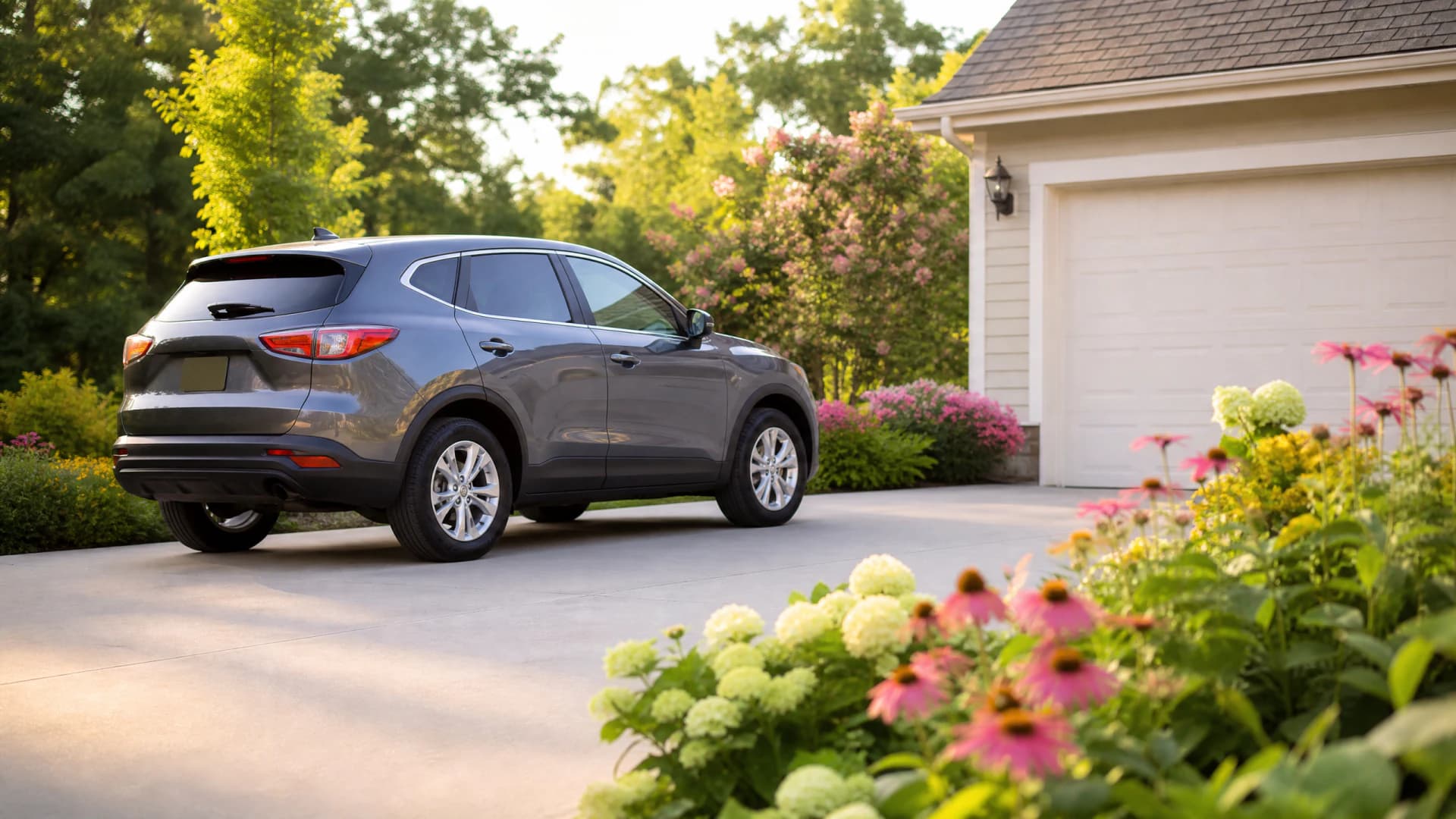
South Dakota issues restricted licenses to drivers who do not meet the standard vision requirements but can demonstrate safe driving ability under specific conditions. Common restrictions for drivers with progressive vision loss include daylight-only operation, limited radius from home address (typically 10 to 25 miles), no interstate highway use, and maximum speed limits (usually 45 mph or lower).
The Department of Public Safety determines restrictions based on the Vision Examination Report submitted by your ophthalmologist and the results of an on-road driving evaluation conducted by a state examiner. The on-road test is not the standard road test given to new drivers — it evaluates your ability to compensate for vision loss, judge distances accurately, and respond to traffic conditions within the proposed restriction parameters.
Restricted licenses are valid for one year and require annual renewal with updated vision reports and periodic retesting. If your vision stabilizes and remains within the restricted license parameters, many drivers in the 75-and-older bracket maintain restricted licenses for several years before voluntarily reducing driving or transitioning to non-driver identification.
How Does a Restricted License Affect Your Insurance Coverage and Rates?
A restricted license triggers mandatory disclosure to your insurer because it represents a material change in your licensing status. You must notify your carrier within 30 days of receiving the restriction, and the carrier will add a restriction endorsement to your policy that limits coverage to operation within the stated restrictions.
Insurance rates do not automatically increase when a daylight-only or radius restriction is added. In fact, some carriers reduce premiums for drivers with mileage or time-of-day restrictions because the exposure period is lower. However, the restricted license signals to underwriting that vision loss has progressed to a functional level, which increases non-renewal risk in the 75-and-older age bracket.
Carriers known to continue coverage for drivers with restricted licenses in South Dakota include State Farm, Farmers, and Auto-Owners. Progressive and GEICO have higher non-renewal rates for restricted license holders over 75, particularly when the restriction is vision-related rather than a physical mobility accommodation. If your current carrier non-renews after you add a restriction, South Dakota does not operate an assigned risk pool for non-standard drivers, but non-standard carriers such as Dairyland and National General write policies for restricted license holders at higher premiums, typically $140 to $220 per month for minimum liability coverage.

Find Coverage That Fits Driving Past 75
Compare Auto Insurance for Drivers 75+
When Should You Proactively Request a Vision Examination Report?
If your ophthalmologist has told you that your macular degeneration is progressing and you are approaching the 20/40 threshold, request a formal Vision Examination Report before your next DMV renewal. Submitting the report proactively allows you to discuss restricted license options with the Department of Public Safety before you fail a DMV screening and face a 60-day deadline under automatic suspension threat.
Proactive reporting also gives you time to complete a mature driver refresher course, which can offset rate increases if your insurer learns of the restricted license. South Dakota does not mandate mature driver course discounts, but most major carriers offer 5% to 10% premium reductions for drivers 55 and older who complete an approved course within the prior three years. AARP Smart Driver and AAA Roadwise Driver are both state-approved and available online.
If you are already operating with vision near the 20/40 limit and have had a close-call incident or minor at-fault accident in the past 12 months, request the vision report immediately. Carriers review claims history more aggressively in the 75-and-older bracket, and a second incident with borderline vision creates non-renewal risk even if no citation was issued.

What Happens If You Continue Driving Without Reporting Vision Loss That Affects Safety?
If you are involved in an at-fault accident and the investigating officer notes vision impairment as a contributing factor, the South Dakota Department of Public Safety can mandate an immediate vision retest and suspend your license pending the results. The officer's report will also be reviewed by your insurer's claims adjuster, and if the accident involved failure to see a vehicle, pedestrian, or signal that a driver with standard vision would have detected, the claim may be denied under the policy exclusion for operation outside license qualifications.
South Dakota physicians are required to report drivers with conditions that impair safe operation to the Department of Public Safety, though macular degeneration alone does not trigger mandatory reporting unless the physician advises the patient to stop driving. If your ophthalmologist files a report, you will receive a notice requiring a vision retest within 30 days. Failure to comply results in automatic suspension.
Driving with a suspended license voids your insurance coverage entirely. If you are involved in an accident while suspended, your insurer will deny the claim, and you will be personally liable for all damages, medical costs, and legal judgments. South Dakota is a fault-based state, and drivers in the 75-and-older bracket involved in serious at-fault accidents while uninsured face asset seizure and garnishment orders that can extend through estate settlement.
Should You Maintain Full Coverage on a Paid-Off Vehicle If You Expect a Restricted License?
If you expect to transition to a restricted license within the next 12 to 24 months and you own your vehicle outright, dropping collision and comprehensive coverage can reduce your premium by 40% to 60%. A restricted license limits your driving to lower-risk conditions — daylight hours, familiar routes, reduced speeds — which lowers your collision risk profile, though it does not eliminate it.
The decision depends on your vehicle's current value and your ability to replace it out of pocket if totaled. If your vehicle is worth less than $5,000 and you have sufficient savings to replace it, dropping full coverage and retaining only liability insurance is the most cost-effective approach for drivers in this age bracket. If your vehicle is worth more than $8,000 or represents your only transportation asset, retaining comprehensive coverage provides protection against theft, hail, and animal strikes, which are not related to your vision status.
Some carriers increase liability-only premiums when a restricted license is added because the restriction itself signals elevated risk, even though your actual exposure has decreased. If you experience a liability-only rate increase above 20% after adding a restriction, compare rates with non-standard carriers that price restricted license holders more competitively.
Frequently Asked Questions
Do I need to tell my car insurance company about my macular degeneration diagnosis?
No, not at diagnosis. South Dakota does not require you to report a medical condition until it functionally prevents safe driving or your doctor advises you to stop. You must report if your license becomes restricted or suspended for medical reasons.
Can I still drive in South Dakota if I have macular degeneration?
Yes, as long as you meet the state's vision standard of 20/40 corrected acuity in at least one eye and 105-degree peripheral field. If you fall below 20/40 but remain at 20/50 to 20/70, you may qualify for a restricted license with conditions like daylight-only or radius limits.
Will my car insurance rates go up if I get a restricted license?
Not automatically. Some carriers reduce premiums for daylight-only or mileage restrictions because exposure is lower. However, a vision-related restriction increases non-renewal risk for drivers over 75, particularly with carriers like Progressive and GEICO.
What vision test do I need to pass to renew my South Dakota license after age 75?
You must pass a vision screening at every renewal showing 20/40 acuity in at least one eye and 105-degree horizontal field. If you fail, you have 60 days to submit a Vision Examination Report from an ophthalmologist or face automatic suspension.
Which car insurance companies in South Dakota will cover drivers with restricted licenses?
State Farm, Farmers, and Auto-Owners continue coverage for most restricted license holders over 75. If a mainstream carrier non-renews, non-standard carriers like Dairyland and National General write restricted license policies at higher premiums, typically $140 to $220 per month for minimum liability.
Related Articles

Macular Degeneration & Driving in ND: Insurance Rules
4/29/2026

Macular Degeneration & Driving in MN: License & Insurance
4/29/2026

SC Macular Degeneration: License & Insurance Rules
4/29/2026

Glaucoma & SD License: Vision Rules for Age 75+
4/29/2026

Macular Degeneration & Driving in Texas: Reporting Rules
4/29/2026
Macular Degeneration & Driving in Missouri for Seniors
4/29/2026