
Macular Degeneration and Texas Driving: What You Must Report
Free to compare
What Texas Law Requires You to Report After a Macular Degeneration Diagnosis
Texas does not require you or your physician to report a macular degeneration diagnosis to the Department of Public Safety. No automatic notification system exists. You continue driving on your current license unless you fail to meet vision standards at your next scheduled renewal, which occurs every 6 years for drivers under age 85 and every 2 years for drivers 85 and older.
The state does require 20/40 corrected vision in at least one eye to renew a standard Class C license. If your better eye falls below that threshold, the DPS examiner will fail your vision screening and you'll need to present a Vision Examination Report completed by an ophthalmologist or optometrist within 90 days. That report must confirm you meet minimum standards or qualify for a restricted license.
Your legal obligation begins only if you know your vision no longer meets the 20/40 standard and you continue driving anyway. At that point, continuing to operate a vehicle on public roads creates potential criminal liability if an accident occurs. The diagnosis itself triggers no reporting duty. The functional vision loss does.

When Your Insurance Carrier Can Request Vision Testing Documentation
Texas insurance carriers cannot access your medical records without your written consent, but they can request vision testing results as a condition of policy renewal starting at any age. Most carriers begin requesting vision certifications for drivers between ages 75 and 80. The request typically appears in your renewal packet 30 to 45 days before your policy expires.
The carrier's request is legal under Texas Insurance Code provisions governing underwriting standards. You can refuse to provide the documentation, but the carrier can then non-renew your policy at the end of the current term. They must provide 30 days' written notice of non-renewal and cannot cancel mid-term based solely on your refusal to provide medical records you are not legally required to disclose.
If you provide vision testing results showing corrected vision between 20/40 and 20/70 in your better eye, most carriers will continue your policy but may increase your premium or add restrictions. Vision below 20/70 typically results in non-renewal from standard carriers. Non-standard carriers that specialize in high-risk drivers may still write your policy, but monthly premiums often run $180 to $320 for minimum liability coverage in that market segment.

Restricted License Options When You No Longer Meet Standard Vision Requirements
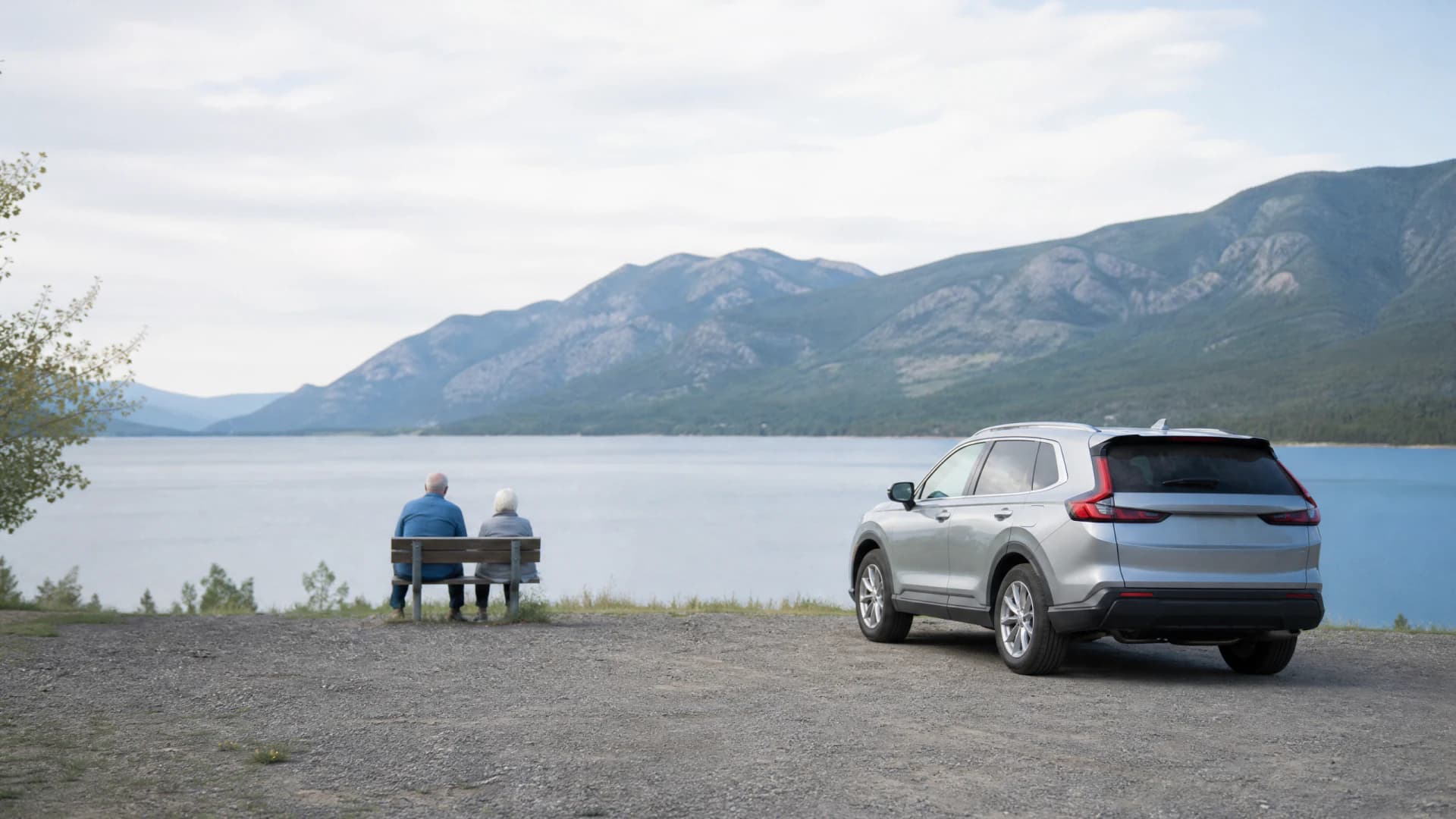
Texas offers restricted Class C licenses for drivers whose corrected vision falls between 20/50 and 20/70 in the better eye, or who have specific visual field deficits. The most common restrictions for macular degeneration patients are daylight driving only and a radius limitation of 10, 25, or 45 miles from your residence. The examining ophthalmologist recommends the specific restrictions based on your functional vision, and DPS makes the final determination.
The restricted license remains valid for the same renewal period as a standard license, but you must carry the Vision Examination Report in your vehicle at all times. Law enforcement can verify your compliance with restrictions during any traffic stop. Violating the restrictions gives officers grounds to issue a citation and potentially suspend your license.
Most auto insurance carriers will continue coverage for drivers with daylight-only or radius restrictions, but expect a premium increase of 15% to 40% compared to your previous standard-license rate. Carriers view the restriction as evidence of elevated risk even though your actual driving exposure decreases. USAA, State Farm, and Farmers have historically been the most willing to continue coverage for drivers aged 75 and older with restricted licenses in Texas, though underwriting decisions vary by individual risk profile.

Find Coverage That Fits Driving Past 75
Compare Auto Insurance for Drivers 75+How the Timing of Disclosure Affects Your Insurance Coverage
You are not required to notify your insurance carrier of a macular degeneration diagnosis the day you receive it, but you must disclose material changes in your health status that affect your ability to drive safely when asked directly on renewal applications. Most Texas carriers ask a version of this question: "Have you experienced any change in your physical or mental condition that may affect your ability to operate a motor vehicle safely?" at each renewal.
Answering that question truthfully after a macular degeneration diagnosis that has progressed to the point of affecting your central vision creates a paper trail. The carrier will likely request vision testing results and potentially a physician's statement. Answering "no" when you know your vision has deteriorated to a level that makes driving unsafe constitutes material misrepresentation and gives the carrier grounds to deny claims arising from accidents you cause.
The lowest-risk disclosure timing is after you have completed your next DPS vision screening and obtained either a renewed standard license or a restricted license. At that point you have official documentation of your functional vision status and the state's determination of your fitness to drive. Carriers can still request additional testing, but you arrive at the conversation with state approval already in hand. If your vision is deteriorating but you have not yet reached your renewal date, schedule an appointment with your ophthalmologist to establish baseline corrected vision measurements before the carrier requests them.

What Happens If You Lose Your License and Still Need to Drive
If your vision deteriorates below 20/70 in your better eye and Texas DPS denies your license renewal, no legal driving option exists for you as an individual operator. The state does not issue hardship licenses for medical vision loss the way it does for certain DUI suspensions. Your choices narrow to arranging transportation through family members, paratransit services, or relocating to housing with accessible services.
Some counties offer reduced-fare senior transit programs, but service frequency and coverage areas vary widely. Urban counties like Harris, Dallas, and Travis provide more extensive paratransit networks than rural counties. Expect wait times of 30 minutes to 2 hours for scheduled pickups in most systems. Monthly paratransit passes typically cost $40 to $80 for unlimited rides within the service area.
Your auto insurance policy terminates once your license is no longer valid. If you own a vehicle but cannot drive it, you can maintain comprehensive-only coverage to protect against theft, fire, and weather damage while the vehicle remains parked. Comprehensive-only coverage on a vehicle valued at $8,000 to $15,000 typically costs $25 to $50 per month in Texas with no liability component. This becomes relevant if an adult family member living at another address may take possession of the vehicle later, or if you expect your vision to stabilize and potentially regain restricted driving privileges after treatment.
Frequently Asked Questions
Can my eye doctor report my macular degeneration diagnosis to the Texas DMV without my permission?
No. Texas does not have a physician reporting requirement for macular degeneration or vision loss. Your ophthalmologist cannot report your diagnosis to the Department of Public Safety without your written consent. The only time your vision status becomes part of the official record is when you present for license renewal and either pass or fail the vision screening.
Will my insurance rate increase immediately after a macular degeneration diagnosis?
Not immediately. Your carrier has no access to your diagnosis unless you disclose it or they request vision testing at renewal. Rate increases typically occur only after you provide vision testing results showing corrected vision below 20/40, or after you receive a restricted license from DPS. Expect increases of 15% to 40% if your license becomes restricted.
What vision standard do I need to meet to keep driving in Texas with macular degeneration?
You need 20/40 corrected vision in at least one eye to maintain a standard Class C license in Texas. If your better eye measures between 20/50 and 20/70, you may qualify for a restricted license with limitations such as daylight-only driving or a mileage radius. Vision below 20/70 in both eyes disqualifies you from holding any Texas driver's license.
Can I keep my car insurance if I lose my license due to vision loss?
Your liability and collision coverage terminates once your license is no longer valid, but you can maintain comprehensive-only coverage on your vehicle to protect against theft, fire, and weather damage while parked. This typically costs $25 to $50 per month on a vehicle valued at $8,000 to $15,000.
How long do I have to report a restricted license to my insurance company?
Texas law does not specify a notification deadline, but your policy contract likely requires you to report material changes at renewal or within 30 days of occurrence. Failing to disclose a restricted license when asked directly on a renewal application constitutes material misrepresentation and can void your coverage retroactively.
Related Articles

Macular Degeneration & Driving in Arizona: Licenses
4/29/2026
Macular Degeneration & Car Insurance in California
4/29/2026

Macular Degeneration & Your Maryland License Over 75
4/29/2026

Macular Degeneration & CT Auto Insurance: Disclosure Rules
4/29/2026

Macular Degeneration & Louisiana License: Report Rules
4/29/2026

Macular Degeneration & Driving in Arkansas: Vision Rules
4/29/2026