
Driving After Knee Replacement in Missouri: Timeline & Sign-Off
Free to compare
When Can You Legally Drive After Knee Replacement in Missouri?
Missouri has no state law prohibiting driving after knee replacement surgery. Your legal clearance depends entirely on your orthopedic surgeon's medical release, not a DMV requirement or statutory waiting period. Most surgeons clear patients for driving 4-6 weeks after surgery for right-knee replacements and 2-4 weeks for left-knee replacements in automatic transmission vehicles, but individual recovery varies based on surgical approach, pain management, and range of motion.
The critical threshold is functional ability: you must demonstrate full weight-bearing capacity on the operated leg, reaction time within normal range, and the ability to perform an emergency stop without hesitation. Your surgeon will typically assess these capabilities during follow-up appointments before issuing written clearance. Request this clearance in writing, as it serves as documentation if questions arise later.
Missouri law requires all drivers to operate vehicles safely regardless of medical history. If you resume driving before receiving medical clearance and cause an accident, you face potential liability for negligent operation even if the accident wasn't directly caused by your knee. Keep the written clearance in your vehicle for at least six months post-surgery.

Do You Need to Report Knee Replacement to Your Auto Insurer in Missouri?
Missouri does not require you to report knee replacement surgery to your auto insurance carrier, and most carriers do not ask about orthopedic procedures during renewal. Your policy renewal questionnaire typically asks whether you have conditions that impair your ability to operate a vehicle safely, not whether you've had surgery.
The disclosure requirement becomes active only if your knee replacement results in permanent mobility limitations that affect vehicle operation. If you cannot fully depress the brake pedal, experience delayed reaction time due to residual stiffness, or require vehicle modifications like pedal extensions, those limitations must be disclosed. Failure to disclose material changes in driving ability can result in claim denial under Missouri's material misrepresentation provisions.
Carriers cannot increase your premium based solely on age-related joint replacement surgery. Missouri prohibits rate increases tied exclusively to medical procedures common among older drivers unless those procedures demonstrably increase accident risk. If your carrier raises your rate within six months of learning about your surgery, request written justification citing the specific underwriting factors that changed.


What Your Surgeon's Clearance Letter Should Include
A proper medical clearance letter for return to driving should state your name, the surgery date, the specific procedure performed, and an explicit statement that you are cleared to resume driving without restriction. Generic clearance language like "may resume normal activities" is insufficient if a claim question arises later.
Request that your surgeon include confirmation of three functional benchmarks: full weight-bearing capacity on the operated leg, range of motion sufficient for pedal operation, and reaction time assessed as normal for your age group. These benchmarks directly address the criteria Missouri courts have cited in negligence cases involving post-surgical drivers.
If your surgeon places restrictions on your driving—such as limiting distance, prohibiting highway speeds, or recommending daylight-only operation—those restrictions must appear in the clearance letter. Violating your surgeon's written restrictions creates liability exposure even if Missouri law doesn't independently prohibit the activity. Keep the original letter and provide a copy to any family members who share driving responsibilities during your recovery.
How Knee Replacement Affects Your Auto Insurance Premium
Knee replacement surgery itself does not trigger a rate increase under Missouri insurance law. Carriers rate policies based on driving record, vehicle type, coverage selections, and location—not on orthopedic procedures. If your rate increases at renewal following surgery, the increase must be tied to factors unrelated to your medical history.
Permanent mobility modifications can affect your premium if they require vehicle alterations reported during renewal. Installing hand controls, pedal extensions, or other adaptive equipment may shift your vehicle into a different underwriting class. Some carriers offer rate reductions for vehicles equipped with certified adaptive technology, recognizing that drivers who proactively address mobility limitations often demonstrate lower claim frequency.
Drivers over 75 in Missouri typically see rate increases of 15-25% between age 75 and 80 regardless of health status. If your carrier raises your rate significantly within months of your surgery, compare offers from carriers specializing in senior driver policies. State Farm, GEICO, and Nationwide maintain consistent underwriting for drivers over 75 with clean records, and temporary post-surgical restrictions rarely affect their pricing models.

Find Coverage That Fits Driving Past 75
Compare Auto Insurance for Drivers 75+
When to Increase Medical Payments Coverage Before Surgery
Medical payments coverage pays your medical bills after an auto accident regardless of fault, and it coordinates with Medicare to cover out-of-pocket costs Medicare doesn't pay. If you're scheduled for knee replacement and you currently carry Missouri's minimum $5,000 medical payments limit, consider increasing it to $10,000-$25,000 before your surgery date.
The reason: if you're involved in an accident during your recovery period—even as a passenger—your medical payments coverage will apply to bills related to the accident, but Medicare may deny claims it considers related to a compensable event. Higher medical payments limits protect you from out-of-pocket exposure during the months when your mobility is still recovering and fall risk is elevated.
This coverage increase costs approximately $8-$15 per month for most drivers over 75 in Missouri. Request the increase at least 30 days before your scheduled surgery so it's active during your entire recovery window. You can reduce the limit back to standard levels six months post-surgery if your budget requires it.
What Happens If You Have an Accident During Recovery
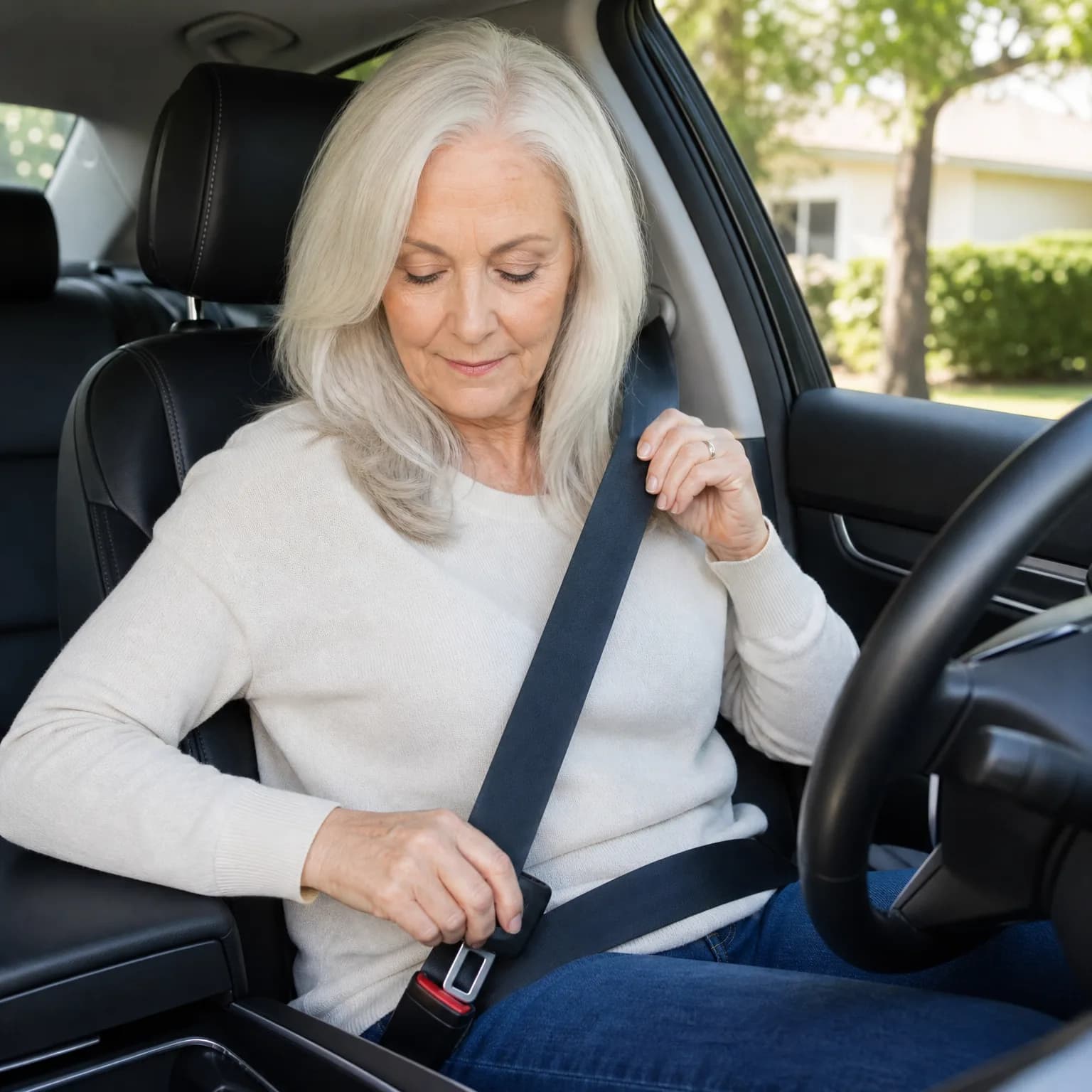
If you're involved in an accident before receiving formal medical clearance to drive, Missouri's comparative fault system still applies—you're not automatically liable solely because you were recovering from surgery. The at-fault determination depends on the accident circumstances, not your medical history.
Your carrier will ask whether you were medically cleared to drive at the time of the accident. If you weren't cleared and your knee limitation contributed to the accident—for example, delayed braking due to residual stiffness—your claim may be denied for operating the vehicle against medical advice. This is distinct from fault for the accident itself; it's a policy compliance issue.
Missouri requires minimum liability limits of 25/50/25, but many drivers over 75 carry 100/300/100 or higher. If you cause an accident during recovery and you're found negligent for driving without clearance, your liability coverage still applies to the other party's damages, but your collision and medical payments coverage may be denied for your own vehicle and injuries. The denial applies only to your coverage, not to your legal obligation to the other driver.
Missouri Mature Driver Course After Joint Replacement
Missouri offers a mature driver course through AARP and AAA that qualifies drivers 55 and older for a premium discount. Completing the course after knee replacement demonstrates to your carrier that you've proactively updated your driving skills to account for any physical changes, and it locks in a discount typically worth 5-10% for three years.
The course includes updated reaction time exercises, vehicle handling adjustments for drivers with mobility limitations, and guidance on when to self-restrict driving during recovery from medical procedures. Most carriers in Missouri honor the discount regardless of when you complete the course relative to your surgery.
The course is offered online and in-person. Online completion takes approximately 4 hours and costs $20-$25. Submit your completion certificate to your carrier within 30 days to activate the discount at your next renewal. If you completed the course within the past three years, you don't need to repeat it—your existing certificate remains valid and your discount stays active.
Frequently Asked Questions
Can my insurance company drop me after knee replacement surgery?
No. Missouri prohibits carriers from non-renewing policies based solely on orthopedic surgery or age-related medical procedures. Your carrier can only non-renew for reasons like nonpayment, license suspension, or material misrepresentation—not for having knee replacement surgery.
Do I need to take a driving test after knee replacement in Missouri?
Missouri does not require a driving test after knee replacement surgery. You need only your surgeon's written clearance confirming you can operate a vehicle safely. The DMV does not track orthopedic procedures and will not contact you for retesting.
How long does the mature driver discount last in Missouri?
The Missouri mature driver course discount remains active for three years from your completion date. After three years, you must retake the course to maintain the discount. Most carriers apply the discount automatically at each renewal during the three-year window.
What if my surgeon restricts me to daytime driving only?
If your surgeon places time-of-day restrictions on your driving, you're legally required to follow them. Violating those restrictions and causing an accident can result in claim denial and potential negligent operation liability, even if Missouri law doesn't independently prohibit nighttime driving post-surgery.
Related Articles

Driving After Knee Replacement in Minnesota (75+)
4/29/2026

Driving After Hip Replacement in Missouri Over 75
4/29/2026

Driving After Knee Replacement in Mississippi Over 75
4/29/2026

Driving After Knee Replacement in Michigan (75+)
4/29/2026

Driving After Knee Replacement: New Mexico Rules (75+)
4/29/2026

Driving After Knee Replacement in Kansas: Over 75
4/29/2026