
Driving After Knee Replacement in Ohio: What Seniors Need to Know
Free to compare
When Can You Legally Drive After Knee Replacement in Ohio?
Ohio law does not require a doctor's release to resume driving after knee replacement surgery. You can legally drive as soon as you believe you can safely operate the vehicle, regardless of how long ago your surgery occurred.
This puts the decision entirely on you. No state agency reviews your medical status. No DMV approval is required. The Ohio Bureau of Motor Vehicles does not track surgical procedures or mandate medical clearance for return to driving after orthopedic surgery.
The absence of a legal requirement does not mean the decision is consequence-free. If you cause an accident while driving against your surgeon's explicit instructions, your insurer can investigate whether you were medically fit to drive. That investigation can affect claim payment and future coverage.

What Most Surgeons Actually Recommend for Driving Timeline
Most orthopedic surgeons clear patients for driving 4–6 weeks after total knee replacement, assuming the surgery was on the right knee. Left knee patients often receive clearance at 2–3 weeks if they drive an automatic transmission.
The timeline depends on three factors: which knee was replaced, whether you can perform an emergency stop without hesitation, and whether you still require prescription pain medication that impairs reaction time. Your surgeon evaluates range of motion and reflex speed before clearing you.
Get the clearance in writing. A documented release protects you if an insurer questions your fitness to drive after an accident. Most surgeons provide a standard return-to-activity form. If yours does not, request a signed note stating the date you were cleared for unrestricted driving.


Do You Have to Tell Your Insurance Company About Knee Surgery?
Ohio does not require you to notify your auto insurer about knee replacement surgery. Your policy application asks about license suspensions, DUI convictions, and household members—not medical procedures.
Your insurer has no legal right to your medical records unless you file a claim. Most carriers never learn about your surgery unless you volunteer the information or an accident triggers a claims investigation.
The risk appears after an accident. If you cause a collision within 8–12 weeks of surgery, the other driver's insurer may investigate whether post-surgical impairment contributed. If your surgeon's notes show you were told not to drive yet, that creates liability exposure. Your own insurer can deny or reduce your claim if they determine you violated your policy's requirement to operate the vehicle safely.
What Counts as Medical Impairment for Insurance Purposes
Driving while impaired is not limited to alcohol. Your insurance policy requires you to operate the vehicle safely. If prescription opioids, reduced range of motion, or delayed reaction time from recent surgery prevent safe operation, you are technically in violation.
Most claim denials cite one of three conditions: driving while taking medication labeled "do not operate machinery," driving before regaining full reflex function in the operated leg, or driving against a surgeon's documented restriction. Insurers rarely deny claims for surgeries older than 90 days unless the medical record shows ongoing restrictions.
The burden of proof is on the insurer. They must demonstrate that your post-surgical condition directly caused or worsened the accident. A fender-bender in a parking lot is harder to tie to knee mobility than a failure to brake in time on a highway.

Find Coverage That Fits Driving Past 75
Compare Auto Insurance for Drivers 75+
How This Affects Drivers Over 75 in Ohio
Drivers over 75 face higher scrutiny after any accident, and post-surgical driving adds another layer. Insurers already apply age-based risk models that assume slower reflexes and longer stopping distances. A recent surgery gives them additional justification to non-renew your policy at the next term.
Ohio does not mandate driver retesting at any age, but your insurer can request a medical evaluation after an at-fault accident if they believe age or health played a role. That evaluation becomes part of your underwriting file. If it reveals restricted mobility or delayed reaction time, expect a rate increase or non-renewal notice at your next policy term.
If you are already in a non-standard or assigned risk pool, post-surgical accidents can eliminate your remaining carrier options. Non-standard insurers have narrower risk tolerance. A single at-fault claim combined with a recent surgery can trigger immediate non-renewal in this market segment.
What to Do Before You Start Driving Again
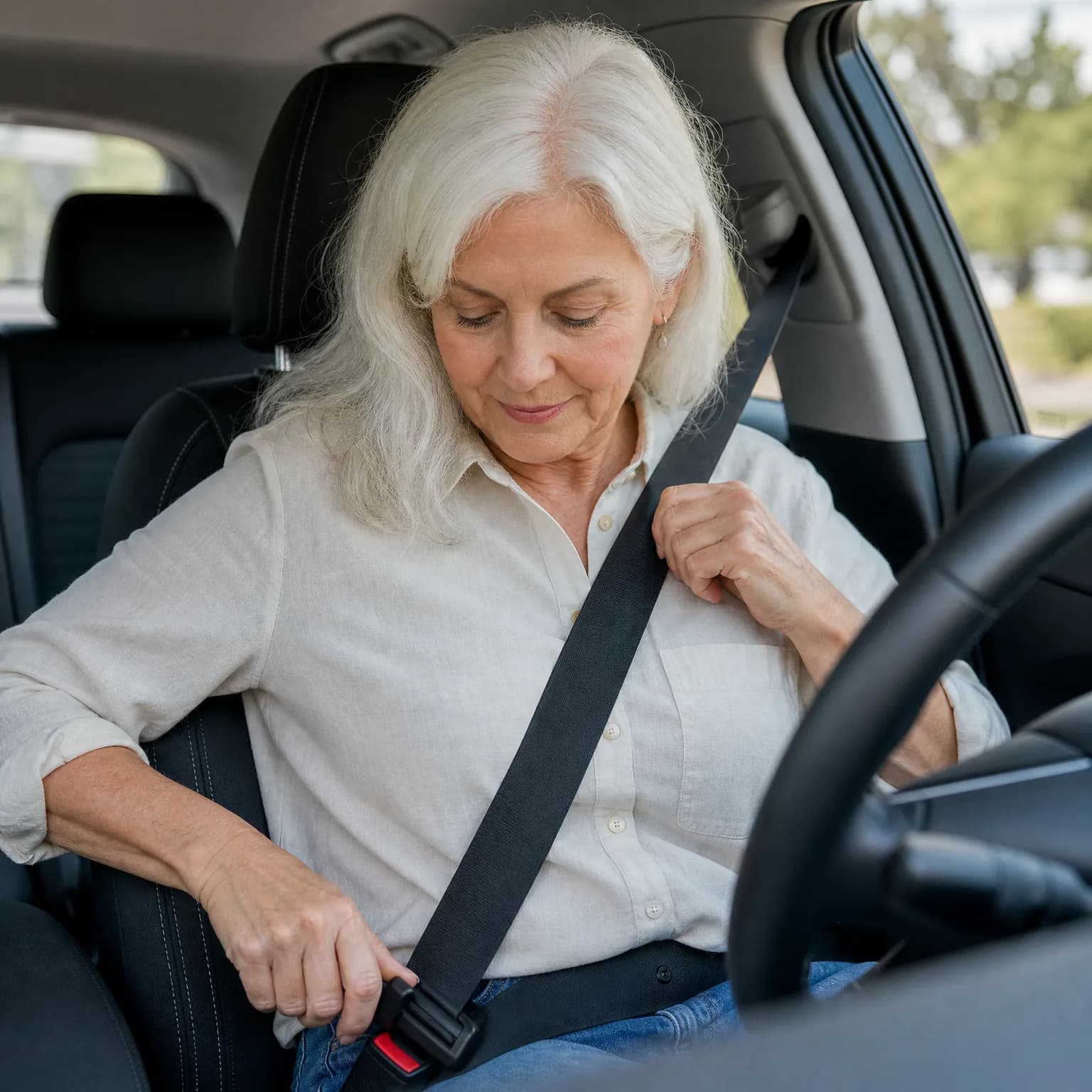
Test your braking response in a safe environment before driving on public roads. Sit in your parked vehicle and practice slamming the brake pedal with your surgical leg. If you hesitate, feel pain, or cannot apply full force, you are not ready.
Stop taking opioid pain medication at least 48 hours before your first drive. Even if your surgeon clears you for driving, operating a vehicle while taking hydrocodone, oxycodone, or tramadol violates Ohio's impaired driving statute and voids your insurance coverage.
Schedule your first post-surgical drive during low-traffic hours on familiar roads. Avoid highways, rush hour, and night driving until you have completed at least three short trips without discomfort or hesitation. Your reaction time may be slower than you expect, even after your surgeon's clearance.
Does This Change Your Insurance Rates in Ohio?
Knee replacement surgery itself does not appear in your driving record and does not directly affect your insurance rates. Insurers do not have access to your surgical history unless you file a claim or disclose it during underwriting.
Your rates change only if the surgery contributes to an accident. An at-fault claim raises your premium by an average of 25–40% in Ohio, regardless of cause. If the insurer's investigation reveals post-surgical impairment, they may apply the same surcharge as a distracted driving or reckless operation claim.
For drivers over 75, a single at-fault claim can trigger non-renewal even without surgery as a factor. Adding post-surgical impairment to the claim file accelerates that timeline. Expect non-renewal notices from standard carriers within 60–90 days of claim closure if your file shows both age and medical factors.
Frequently Asked Questions
Can my insurance company find out I had knee surgery?
Your insurer has no access to your medical records unless you file a claim that triggers an investigation. Ohio law does not require you to report surgeries to your auto insurance carrier. Most insurers never learn about knee replacement unless an accident occurs within 12 weeks of surgery and the other party's insurer investigates your fitness to drive.
What happens if I cause an accident right after knee replacement?
Your insurer will investigate whether post-surgical impairment contributed to the accident. If your surgeon's records show you were told not to drive yet, or if you were still taking opioid pain medication, your claim can be denied or reduced. Even if your claim is paid, expect a 25–40% rate increase and possible non-renewal at your next term.
Do I need a doctor's note to start driving again in Ohio?
Ohio does not legally require a doctor's release to resume driving after surgery. However, getting written clearance from your surgeon protects you if an insurer later questions your fitness to drive. Most orthopedic surgeons provide a standard return-to-activity form that includes driving clearance.
How long should I wait to drive after left knee replacement?
Most surgeons clear left knee replacement patients for driving an automatic transmission at 2–3 weeks post-surgery, assuming normal recovery and no opioid use. Right knee patients typically wait 4–6 weeks. The timeline depends on your ability to perform an emergency stop without hesitation or pain.
Related Articles

Driving After Knee Replacement: Timeline & Insurance
4/29/2026

Driving After Hip Replacement in Ohio: Clearance Guide
4/29/2026

Driving After Knee Replacement in Kentucky: 75+ Guide
4/29/2026

Driving After Knee Replacement in Illinois: Timeline
4/29/2026

Driving After Knee Replacement in Oklahoma | Over 75
4/29/2026
Driving After Knee Replacement in Michigan (75+)
4/29/2026