
Returning to Driving After Knee Replacement: Oregon Timeline & Insurance
Free to compare
Do You Need to Tell Your Insurance Company About Knee Replacement Surgery?
No. Oregon law does not require you to notify your auto insurance carrier about knee replacement surgery, and there is no disclosure obligation unless your doctor or the Oregon DMV has explicitly suspended your license due to a medical condition.
Most carriers ask about license suspensions and DUI convictions at renewal, not surgical procedures. Voluntary disclosure of a knee replacement may prompt your carrier to request a medical review or driving evaluation, particularly if you are over 75, and that review can result in a premium increase or non-renewal notice even if your driving record is clean.
If your surgeon or primary care physician has told you not to drive during recovery, that instruction does not trigger a legal reporting requirement to your insurer. It is medical advice, not a license restriction. You are responsible for following it, but you are not required to report it.

How Long Does Knee Replacement Recovery Take Before You Can Drive?
Most knee replacement patients regain the strength and reaction time needed to drive within 4–8 weeks after surgery, depending on whether the surgery was on the right leg (which controls the brake and accelerator) or the left leg. Right knee replacements typically require 6–8 weeks before safe driving is possible. Left knee replacements may allow a return to driving in 4–6 weeks if you drive an automatic transmission vehicle.
Your orthopedic surgeon will assess three specific criteria before clearing you to drive: full weight-bearing ability without assistive devices, unrestricted range of motion in the surgical knee, and off all opioid pain medication. Most surgeons will not provide written clearance until you demonstrate a brake reaction time under 0.7 seconds during an in-office test or physical therapy evaluation.
Oregon does not require a formal driving test or DMV notification after knee replacement. The decision to resume driving is between you and your surgeon. If you resume driving before your surgeon clears you and you are involved in an at-fault collision, your insurer may deny the claim on the grounds that you were driving against medical advice, but this is a claims dispute, not a coverage termination.

What Happens If You Have a Collision During Recovery?
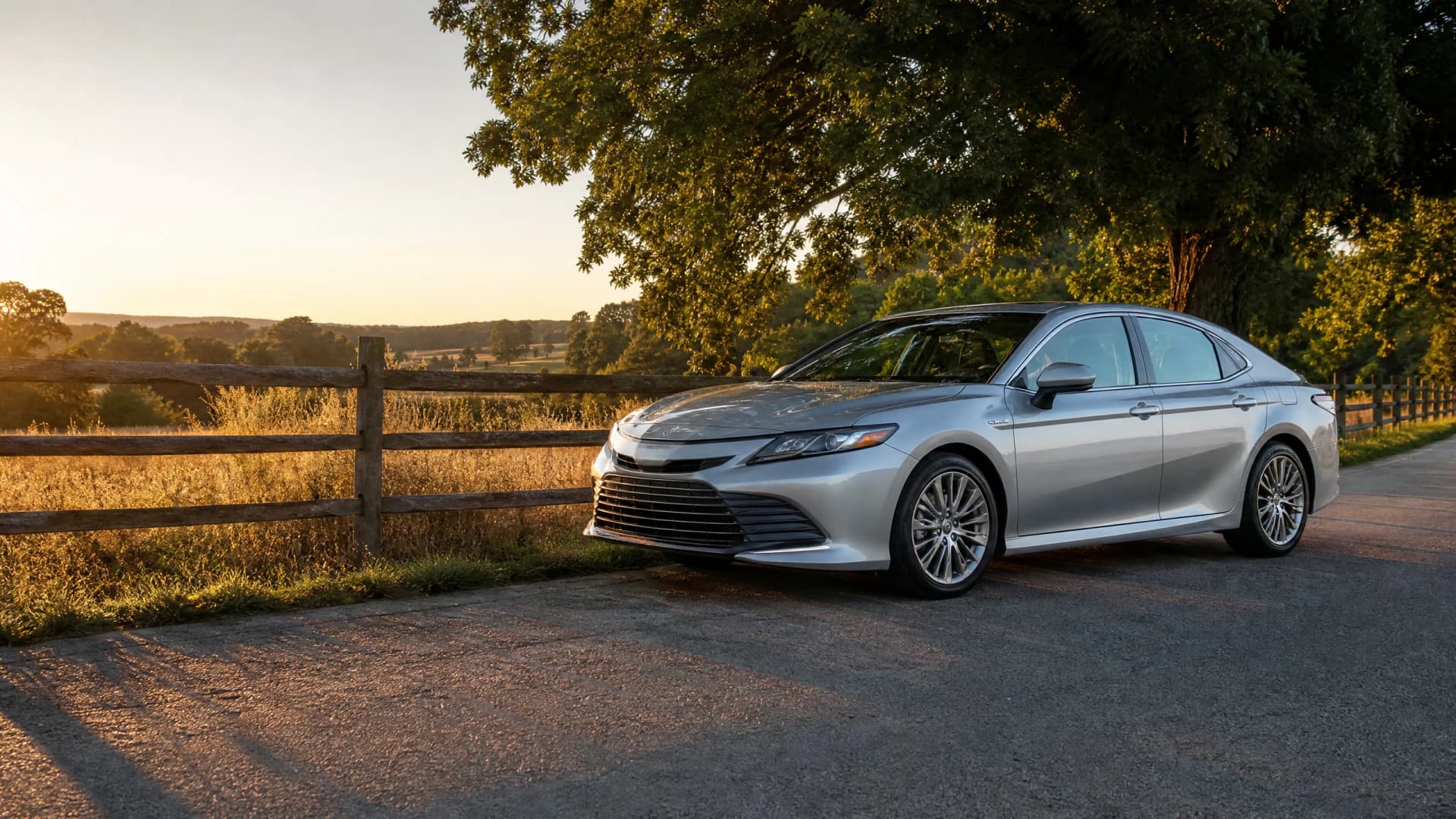
If you are involved in an at-fault collision during the recovery window before your surgeon has cleared you to drive, your liability coverage will still pay for the other driver's damages under Oregon law. Carriers cannot deny third-party liability claims based on your medical status. Your collision and comprehensive coverage, however, may be denied if the insurer can demonstrate that you were driving against explicit medical restriction and that restriction contributed to the collision.
The denial requires documentation. If your surgeon told you not to drive and you signed an acknowledgment of that instruction, the carrier has grounds to deny your own vehicle damage claim. If your surgeon gave you general recovery guidelines but no explicit driving prohibition, the denial is harder to enforce. Most carriers will pay the claim and address the medical question at renewal rather than during the claims process.
This asymmetry is why voluntary disclosure during recovery can backfire. If you tell your carrier you are recovering from surgery and not driving, they may note the disclosure in your file. If you then have a collision three weeks later, that note becomes evidence that you resumed driving against your own stated timeline. If you had not disclosed the surgery at all, the carrier would have no contemporaneous record of a restriction.
Should You Reduce Coverage During the Recovery Period?
No. Dropping collision or comprehensive coverage during a 6–8 week recovery period will not reduce your premium enough to justify the reinstatement hassle, and some carriers charge a reinstatement fee or treat the coverage gap as a lapse when you add the coverage back.
If you are not driving at all during recovery, you can ask your carrier about a storage or lay-up policy, which suspends liability and collision coverage but maintains comprehensive coverage for fire, theft, and vandalism. Most carriers in Oregon offer this option, and it reduces your premium by 60–80% during the storage period. You must reinstate full coverage before driving again, and reinstatement is not instant—it typically requires 24–48 hours and a phone call to your agent.
The better option for most drivers over 75 is to maintain full coverage and simply not drive during recovery. Your premium does not change whether you drive 50 miles per week or zero miles per week unless you formally notify the carrier of a mileage reduction and request a low-mileage discount adjustment. Most carriers do not automatically reduce premiums when you stop driving temporarily.

Find Coverage That Fits Driving Past 75
Compare Auto Insurance for Drivers 75+
Does Oregon Require a Medical Review or Driving Test for Older Drivers?
Oregon does not require medical exams, vision tests, or road tests based on age alone. Drivers over 75 renew their license every 8 years under the same process as younger drivers. The Oregon DMV can require a medical review or driving test if a physician, law enforcement officer, or family member files a request for review, but knee replacement surgery does not automatically trigger that process.
If your surgeon believes your mobility or reaction time is permanently impaired after surgery, they can file a Medical Report form with the DMV, which may result in a restricted license or a required driving evaluation. This is rare for standard knee replacement patients. It applies primarily to cases with complications, chronic pain, or secondary conditions that affect driving ability.
Your insurance carrier does not receive notice of a DMV medical review unless the review results in a license suspension or restriction. If you pass the review and retain an unrestricted license, your carrier has no record of it. If the review results in a restriction—such as daytime-only driving or a geographic limitation—you are required to disclose that restriction at your next policy renewal.

Will Your Premium Increase After Knee Replacement?
Not automatically. Oregon prohibits insurers from increasing premiums based solely on age or medical condition unless the condition results in a license restriction or suspension. Knee replacement surgery, by itself, is not a rating factor.
However, carriers in Oregon can non-renew policies for drivers over 75 without stating a reason, as long as they provide 45 days' notice before the renewal date. If you are already in a high-cost or high-risk rating tier due to your age, disclosing a major surgery may prompt the carrier to non-renew at the next renewal period rather than continue coverage. This is not a penalty for the surgery—it is a business decision based on actuarial risk in your age bracket.
If you are non-renewed, you have access to Oregon's assigned risk pool, which guarantees coverage at state-regulated rates. Those rates are typically 40–60% higher than standard market rates, but they are capped and cannot be denied based on age or medical history.
What Coverage Do You Actually Need After 75?
Most drivers over 75 who own their vehicle outright question whether collision coverage remains cost-justified. If your vehicle is worth less than $5,000 and your collision premium is more than 10% of the vehicle's value annually, the coverage is no longer actuarially sound. You are paying $600–$800 per year to insure an asset worth $4,000, and your deductible is likely $500–$1,000.
Liability coverage, however, is non-negotiable. Oregon's minimum liability limits are $25,000 per person for bodily injury, and a single at-fault collision with serious injuries can generate claims far exceeding that limit. Most drivers over 75 should carry at least $100,000/$300,000 liability limits, and umbrella coverage is worth evaluating if you have home equity or retirement assets that could be targeted in a lawsuit.
Medical payments coverage becomes more valuable after 75, particularly if you have Medicare as primary insurance. Medical payments coverage pays your out-of-pocket costs after a collision regardless of fault, and it coordinates with Medicare to cover deductibles and co-pays. The coverage typically costs $40–$80 per year for $5,000 in coverage, and it eliminates the need to file a claim against the other driver's liability policy for your own medical bills.
Frequently Asked Questions
Can my insurance company cancel my policy if I have knee surgery?
No. Oregon law prohibits mid-term cancellations based on medical procedures or age. Your carrier must honor your policy through the end of the current term. They can choose not to renew your policy at the next renewal date, but they must provide 45 days' written notice and cannot cancel during your recovery period.
Do I need a doctor's note to resume driving after knee replacement?
Oregon does not legally require a doctor's clearance to resume driving after surgery, but your orthopedic surgeon will assess your weight-bearing ability, range of motion, and reaction time before recommending you drive. If you resume driving without clearance and have an at-fault collision, your insurer may deny your collision claim on the grounds that you were driving against medical advice.
Will my premium go down if I tell my insurer I'm not driving during recovery?
No. Most carriers do not reduce premiums for temporary driving cessation unless you formally request a storage or lay-up policy, which suspends liability coverage entirely. Standard low-mileage discounts apply to annual mileage, not short-term reductions, and voluntary disclosure of surgery may trigger a policy review that works against you at this age bracket.
What is Oregon's assigned risk pool and when would I need it?
Oregon's assigned risk pool guarantees auto insurance coverage to drivers who cannot obtain a policy in the standard market, typically due to age, violation history, or non-renewal by previous carriers. Rates are 40–60% higher than standard market rates but are state-regulated and cannot be denied. Drivers over 75 who receive non-renewal notices from multiple carriers often qualify for assigned risk coverage.
Related Articles
Driving After Knee Replacement in Oklahoma | Over 75
4/29/2026

Driving After Knee Replacement in Colorado (75+)
4/29/2026

Driving After Knee Replacement in WA: Timeline & Rules
4/29/2026

Driving After Knee Replacement in NH: What to Know
4/29/2026

Driving After Hip Replacement Oregon: Timeline & Coverage
4/29/2026

Driving After Knee Replacement in Ohio: Senior Guide
4/29/2026